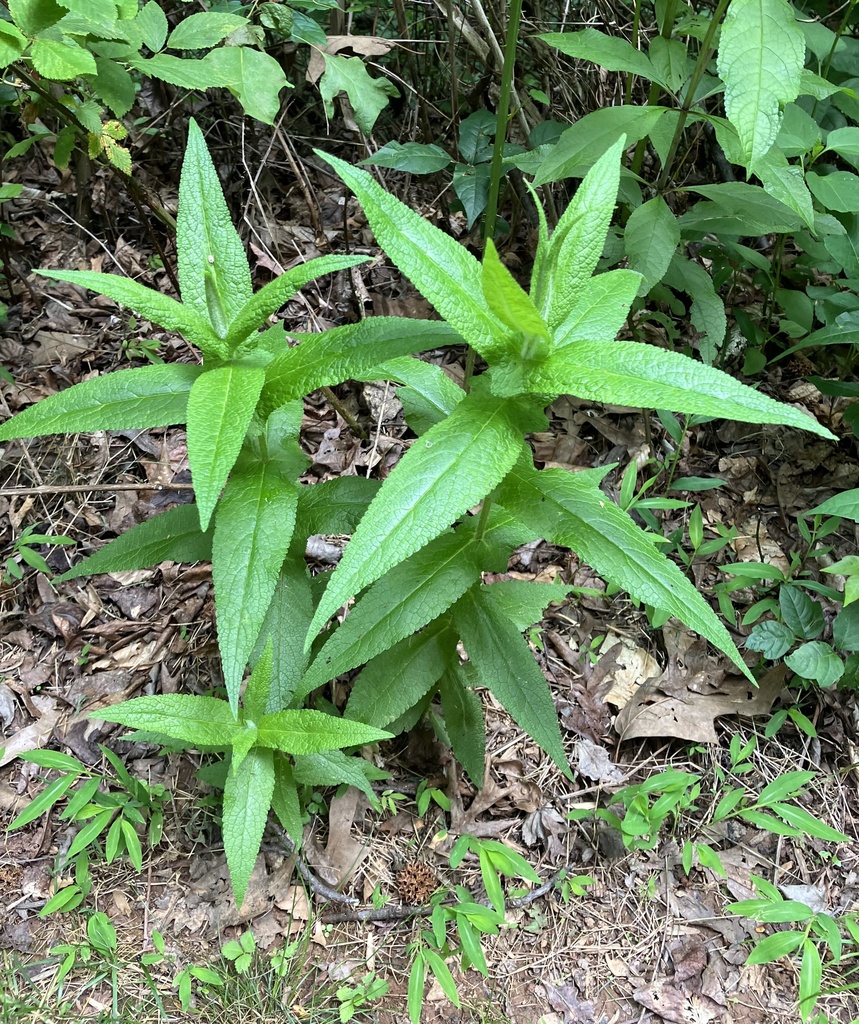
Eupatorium perfoliatum
- Origin
- North America
- Part used
- See detailed notebook
- Tradition
- Traditional ethnobotany
Known to Indigenous tribes and later widely adopted by settlers and nineteenth-century eclectic physicians, boneset owes its nickname to the long feverish nights it accompanied. Its stem literally piercing through opposite leaves earned it the scholarly name "perfoliatum," a mark recognizable among all others in the wet meadows of North America.
Traditional uses
Accompanying fevers and colds
Traditionally drunk hot at the onset of a cold or flu-like state, this bitter infusion was reputed to promote sweating and relieve the aches associated with fever.
Support during winter ailments
Herbalists of the North American countryside used it against coughs, catarrh, and bronchial congestion accompanying seasonal colds.
A bitter tonic use
Owing to its strong bitterness, it was also used in small amounts as a bitter tonic to stimulate the appetite after convalescence.
Relief of feverish aches
Its folk name of "boneset" recalls its traditional use against the intense muscular and joint aches accompanying certain fevers.
Before you use it
A plant of the Asteraceae family containing pyrrolizidine alkaloids potentially toxic to the liver with prolonged use or high doses: professional advice is essential before any use. Not advised during pregnancy and breastfeeding, or for young children. Avoid in cases of liver history or fragility; do not combine with other hepatotoxic substances. Do not exceed occasional, short-term use; prolonged use is not recommended without the supervision of a health professional.
The detailed notebook
- Prepared as a paste or decoction
- Traditional duration of use
- Known contraindications
- Related species and their uses
Where to find it
Partner herbalists — available with the detailed notebook.
Sources
PFAF, Wikipedia