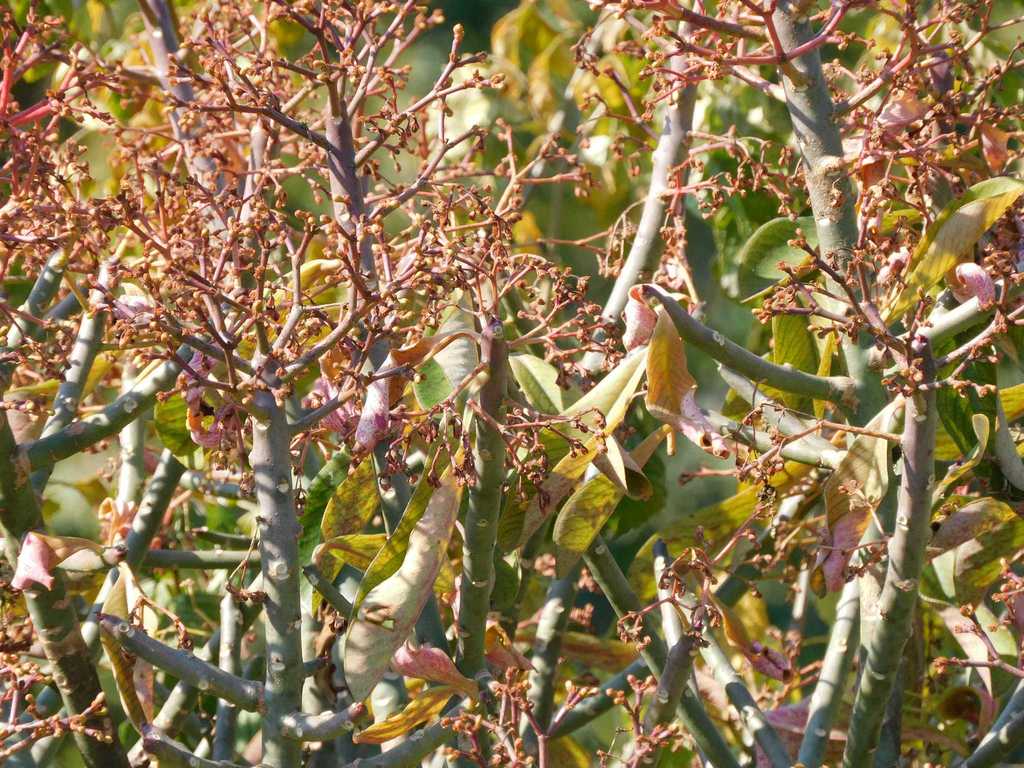
Euphorbia cupularis
- Origin
- Africa
- Part used
- Seeds / fruit
- Tradition
- Traditional ethnobotany
On the arid plateaus of southern and eastern Africa, Euphorbia cupularis rises in fleshy, thorny silhouettes, holding within it a milky latex as feared as it is sought after. Traditional healers of Bantu and Zulu communities knew it for the potency of its sap, reserved for experienced hands. It is among those borderline plants of African pharmacopeia, on the frontier between remedy and poison.
Traditional uses
Traditional treatment of warts
The latex extracted from the fruits was traditionally applied in very small amounts to warts and skin growths, a practice reported among several southern African peoples.
Arrow poison and veterinary use
The highly irritant latex was used in traditional arrow poisons and was sometimes used to treat livestock against certain external parasites.
Traditional purgative at a minute dose
Some oral traditions mention a purgative use of the diluted latex at an extremely low dose, a use now largely abandoned due to its danger.
A plant of symbolic protection
Planted around dwellings or enclosures, this spurge was also regarded as a protective plant, symbolically warding off evil spirits and intruders.
What to know before use
The latex is strongly irritating and blistering: any contact with the skin, eyes, or mucous membranes must be avoided, and gloves are essential for any handling. This plant is toxic if ingested and must never be used internally without supervision by a qualified health professional. Strictly not recommended for pregnant or breastfeeding women, children, and people with open wounds or fragile mucous membranes. In case of accidental contact with the eyes or ingestion, consult a poison control center or a doctor immediately.
The detailed notebook
- Prepared as a paste or decoction
- Traditional duration of use
- Known contraindications
- Related species and their uses
Where to find it
Partner herbalists — available with the detailed notebook.
Sources
Wikipedia