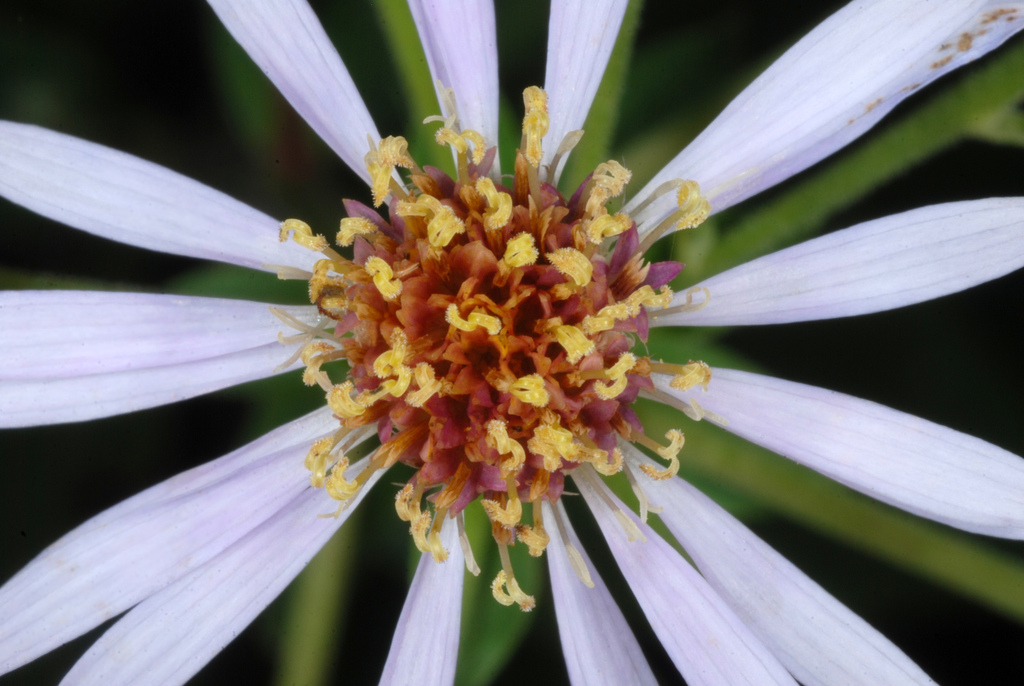
Eurybia macrophylla
- Origin
- North America
- Part used
- Root
- Tradition
- Traditional ethnobotany
In the understory of North America, Eurybia macrophylla, the large-leaved aster, was known to certain Indigenous peoples for the virtues attributed to its root. Less celebrated than other plants of the traditional pharmacopoeia, it nonetheless holds a discreet place in regional herbalists' notebooks, passed down through generations within forest communities.
Traditional uses
Soothing the respiratory tract
The root was traditionally used by certain North American Indigenous groups to relieve ailments of the respiratory tract, notably as an inhaled preparation or drunk as a light decoction.
Relief of headaches
A traditional use of the root by fumigation or decoction to soothe headaches is reported, a practice documented in certain Indigenous oral traditions.
Care for skin irritations
Preparations from crushed or infused root are said to have been applied locally to soothe certain skin irritations, according to loosely formalized traditional uses.
A traditional digestive use
The root is also found, more marginally, among the plants used in decoction to accompany mild digestive troubles in certain local traditional practices.
Before you use it
A traditional use poorly documented scientifically: caution is warranted, particularly for internal preparations. Avoid any use in pregnant or breastfeeding women, for lack of sufficient safety data. Do not give to children without the advice of a health professional. Consult a qualified professional before any prolonged use or therapeutic application.
The detailed notebook
- Prepared as a paste or decoction
- Traditional duration of use
- Known contraindications
- Related species and their uses
Where to find it
Partner herbalists — available with the detailed notebook.
Sources
PFAF, Wikipedia