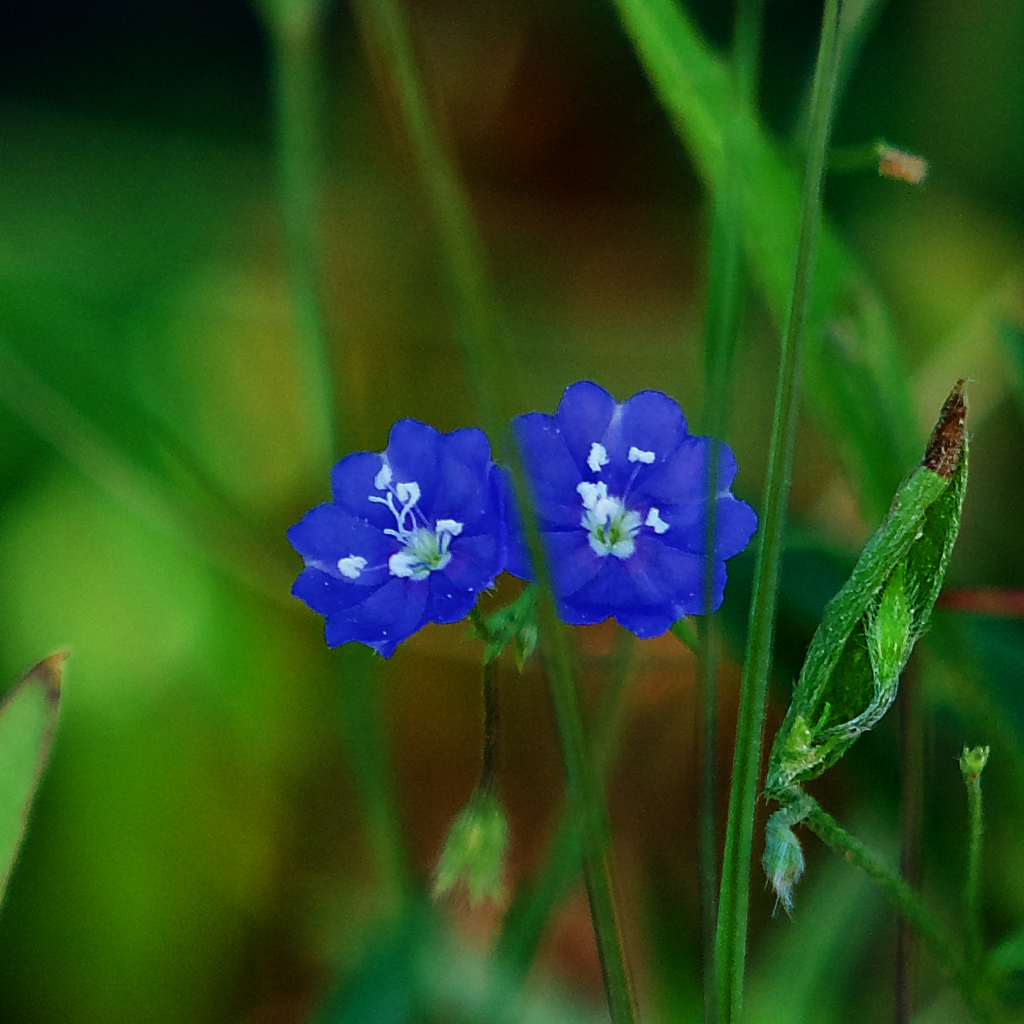
Evolvulus alsinoides
- Origin
- Asia
- Part used
- See detailed notebook
- Tradition
- Traditional ethnobotany
In the medicinal traditions of India and South Asia, Evolvulus alsinoides — a humble creeping bindweed with small blue flowers — holds a discreet but ancient place, particularly within Ayurveda where it is called "Shankhapushpi" (to be distinguished from other plants bearing the same vernacular name). Old texts classify it among the plants called "medhya," reputed to support the mind and memory. It readily grew along pathways, a discreet companion of traveling herbalists.
Traditional uses
Traditional support for serenity
The whole plant was used as a decoction to soothe nervous agitation and promote more peaceful sleep, according to traditional Ayurvedic use.
A medhya plant of Ayurvedic tradition
Classified among the rasayana intended for the intellect, Evolvulus alsinoides was traditionally given to support the memory and concentration of students and scholars.
An ancient fever remedy
In several regions of India, a decoction of the whole plant served as a traditional remedy against feverish states, sometimes combined with other local simples.
Mild digestive support
Certain folk pharmacopeia report a use of the plant to soothe minor digestive discomfort and stimulate the appetite.
What to know before use
Traditional use still poorly documented by modern research: seek the advice of a health professional or experienced herbalist before any use. Not recommended for pregnant or breastfeeding women, for lack of sufficient safety data. Avoid in young children in the absence of reliable dosage data. Caution in cases of ongoing medication treatment, particularly sedative or neurological, due to possible poorly characterized interactions.
The detailed notebook
- Prepared as a paste or decoction
- Traditional duration of use
- Known contraindications
- Related species and their uses
Where to find it
Partner herbalists — available with the detailed notebook.
Sources
PFAF