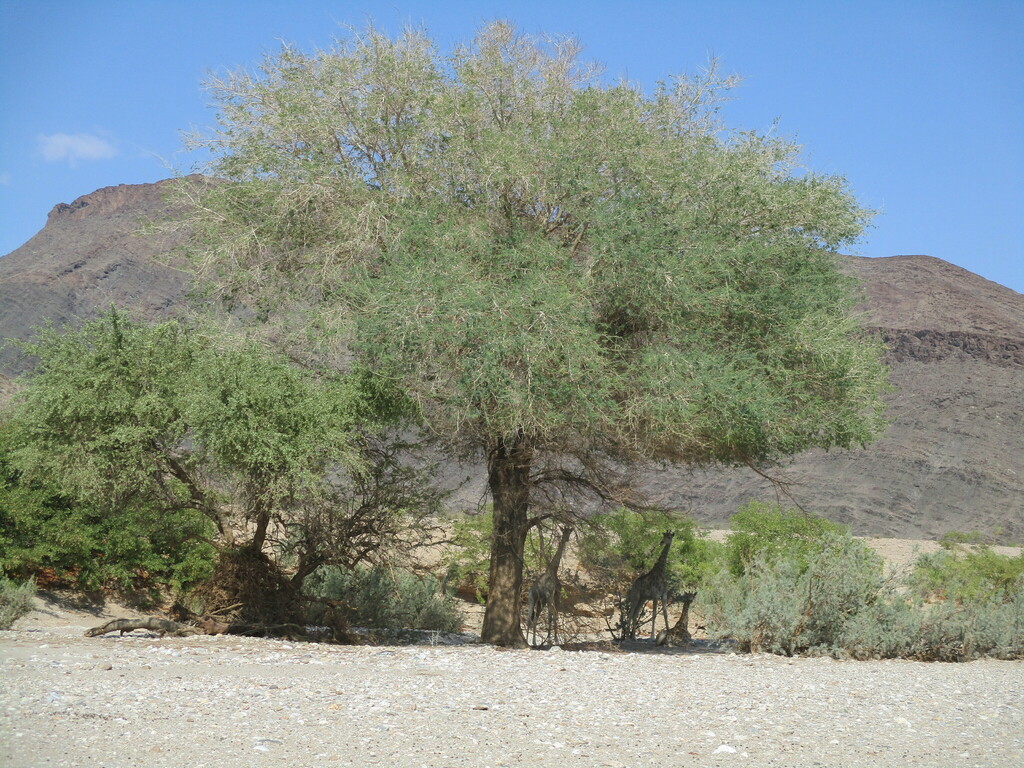
Faidherbia
- Origin
- Asia
- Part used
- Seeds / fruit, Root
- Tradition
- Traditional ethnobotany
Faidherbia, a singular savanna tree that reverses its leafing cycle to turn green during the dry season, has long been observed by rural populations for the uses of its pods and roots. The notebooks of itinerant herbalists and traditional pharmacopeia mention it as a field remedy, passed down orally from generation to generation. Its history, however, remains less documented than that of other trees of the same Mimosaceae family.
Traditional uses
Root decoction against pain
The root, reduced to a decoction, was traditionally used against diffuse pain and inflammatory states, as a local application or steam bath depending on the region.
Pods used in cases of infection
The crushed seeds and pods were used in preparations intended to support the body during infectious episodes, particularly digestive or skin-related, according to the oral tradition of certain communities.
Traditional use on wounds
A paste made from crushed pods was reportedly applied to wounds or skin irritation to promote natural cleansing of the area.
Root decoction for digestive troubles
In certain traditions, the root was also used as a light decoction to soothe passing digestive discomfort.
What to know before use
Faidherbia pods and roots contain compounds (tannins, saponins) whose potential toxicity at high doses is not clearly established; cautious, supervised use is recommended. Use not recommended for pregnant or breastfeeding women, or young children, in the absence of sufficient safety data. Do not exceed occasional, one-off use; consult a health professional or qualified herbalist before any prolonged intake. If undergoing medication treatment, seek professional advice before any use, as interactions cannot be ruled out.
The detailed notebook
- Prepared as a paste or decoction
- Traditional duration of use
- Known contraindications
- Related species and their uses
Where to find it
Partner herbalists — available with the detailed notebook.
Sources
PFAF, Wikipedia