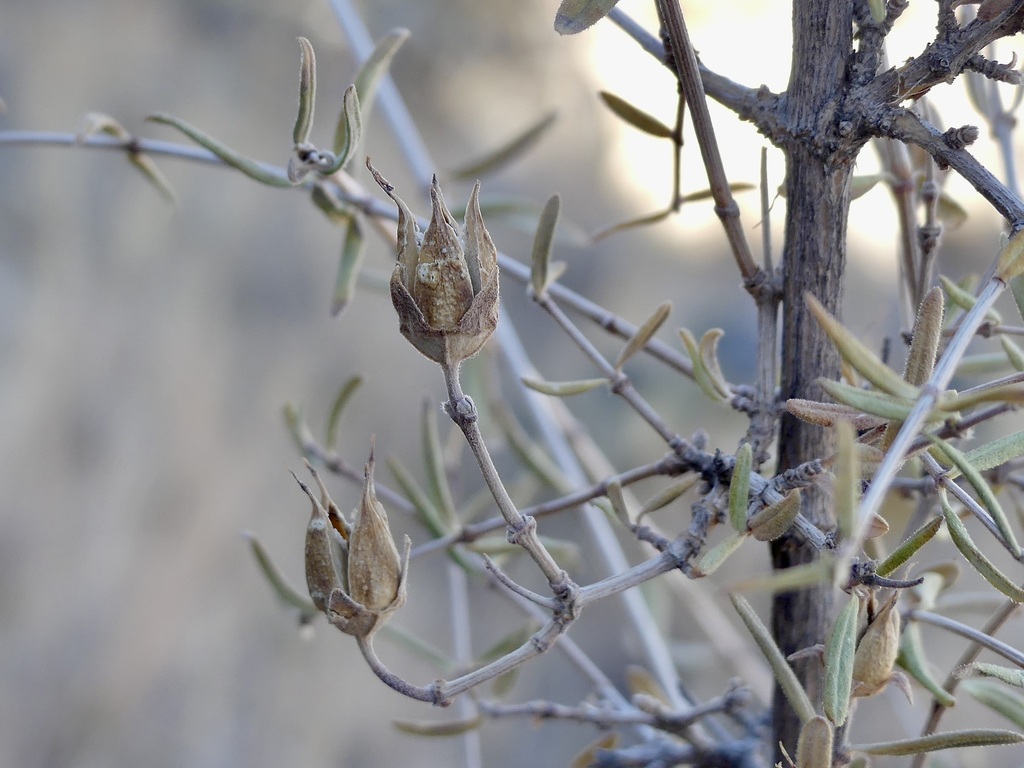
Fendlera rupicola
- Origin
- North America
- Part used
- Bark
- Tradition
- Traditional ethnobotany
On the arid rock faces of the American Southwest, Fendlera rupicola — which some peoples call "arrow wood" — clings to the most improbable crevices. The tribes of the high country, notably the Navajo and other Pueblo nations, knew this unassuming shrub long before botanists gave it its scholarly name, and credited it with a few modest virtues passed down orally through generations.
Traditional uses
Wood for arrow shafts
The straight, sturdy stems of Fendlera rupicola were traditionally sought by certain Indigenous peoples for making arrows, hence its nickname of arrow wood.
Traditional skin care
Bark-based preparations are said to have been used empirically by certain local communities for external skin care, without established scientific documentation.
A reported occasional digestive use
A few ethnobotanical sources mention an occasional use of bark decoctions for mild digestive troubles, but this practice remains poorly documented and localized.
Before you use it
The traditional uses of this plant are poorly documented scientifically; caution is warranted before any internal use. Avoid any use in pregnant or breastfeeding women, for lack of sufficient data. Do not use in children without the advice of a qualified health professional. Consult a herbalist or doctor before any preparation intended for therapeutic use, owing to the lack of studies on the bark's composition and potential toxicity.
The detailed notebook
- Prepared as a paste or decoction
- Traditional duration of use
- Known contraindications
- Related species and their uses
Where to find it
Partner herbalists — available with the detailed notebook.
Sources
PFAF, Wikipedia