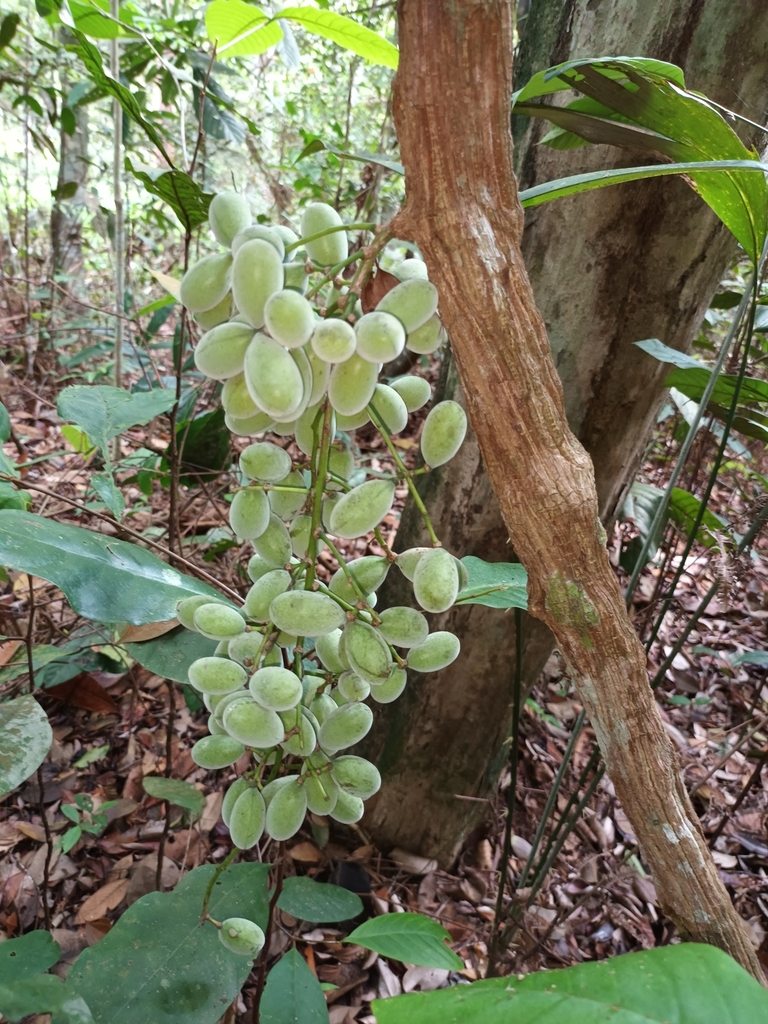
Fibraurea tinctoria
- Origin
- Asia
- Part used
- See detailed notebook
- Tradition
- Traditional ethnobotany
A vine of Southeast Asia's damp forests, Fibraurea tinctoria is recognizable by its bright yellow wood, which long earned it use as a natural dye before traditional herbalists became interested in its virtues. In the folk pharmacopeia of Malaysia, Indonesia, and the Philippines, its stem has for generations been reputed as a bitter, fortifying remedy.
Traditional uses
A traditional bitter for digestion
A decoction of Fibraurea tinctoria's bitter stem is traditionally used in Southeast Asia to support difficult digestion and stimulate the appetite.
Traditional use against fevers
In Malay and Indonesian folk medicine, this yellow vine is reported as a remedy for feverish states and ailments attributed to internal "poisons."
Traditional wound washes
A decoction of the stem was used externally, as a wash or compress, to clean wounds and soothe certain skin conditions according to local tradition.
A bitter liver tonic
Traditionally considered a "depurative" and liver-tonic plant, it was consumed in small quantities during seasonal cures in certain rural communities.
What to know before use
A plant not domesticated for everyday food use: reserve for supervised traditional use, never for prolonged self-medication. Fibraurea tinctoria contains alkaloids (including berberine) that can interact with certain medications and are contraindicated during pregnancy or breastfeeding. Not recommended for children, pregnant or breastfeeding women, and those undergoing medication treatment, without the advice of a health professional. Botanical identification must be certain: several yellow-wooded vines of Southeast Asia can be mistaken for one another.
The detailed notebook
- Prepared as a paste or decoction
- Traditional duration of use
- Known contraindications
- Related species and their uses
Where to find it
Partner herbalists — available with the detailed notebook.
Sources
PFAF