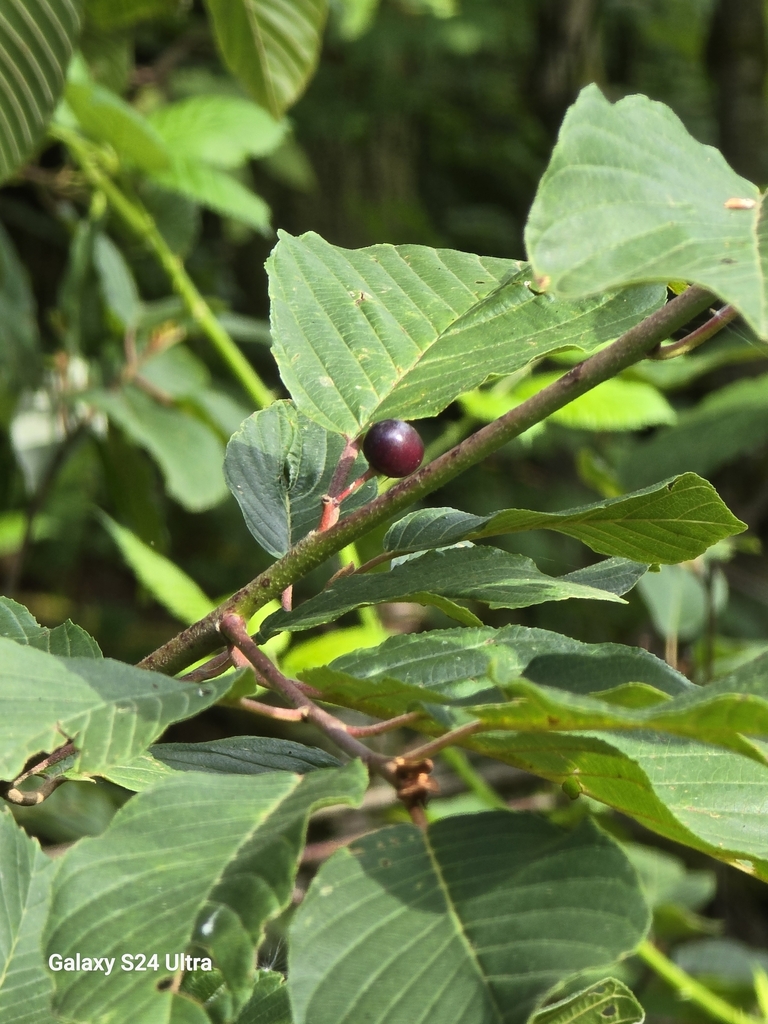
Frangula purshiana
- Origin
- North America
- Part used
- Bark
- Tradition
- Traditional ethnobotany
On the wooded slopes of the North American Pacific, Indian tribes had long known the bark of this large shrub as "cascara sagrada," literally "sacred bark." Settlers and pioneers made it one of the continent's most widely used laxatives, later exported to Europe where herbalists in turn adopted it.
Traditional uses
Occasional constipation
The dried, aged bark was traditionally used to stimulate bowel movement for occasional constipation.
A bitter tonic for the liver and gallbladder
In certain folk traditions, it was regarded as a mild stimulant of liver and biliary function, taken in small amounts.
Occasional skin care
A few more marginal uses report a diluted decoction applied as a wash for minor skin ailments, a use that is now poorly documented.
A ritual purifying remedy
Certain peoples of the Pacific Northwest coast used the bark in preparations intended for purification, associated with ceremonial or seasonal practices.
Before you use it
Never use fresh bark: it must be dried and aged for at least a year, or it will cause severe digestive irritation and violent vomiting. Use is not advised during pregnancy, breastfeeding, in children, or in cases of inflammatory bowel conditions (colitis, appendicitis, obstruction). Prolonged use beyond a few days can lead to bowel dependency and abnormal potassium loss. Seek the advice of a health professional before any use, particularly if taking medication (diuretics, anti-arrhythmics, digitalis).
The detailed notebook
- Prepared as a paste or decoction
- Traditional duration of use
- Known contraindications
- Related species and their uses
Where to find it
Partner herbalists — available with the detailed notebook.
Sources
PFAF, Wikipedia