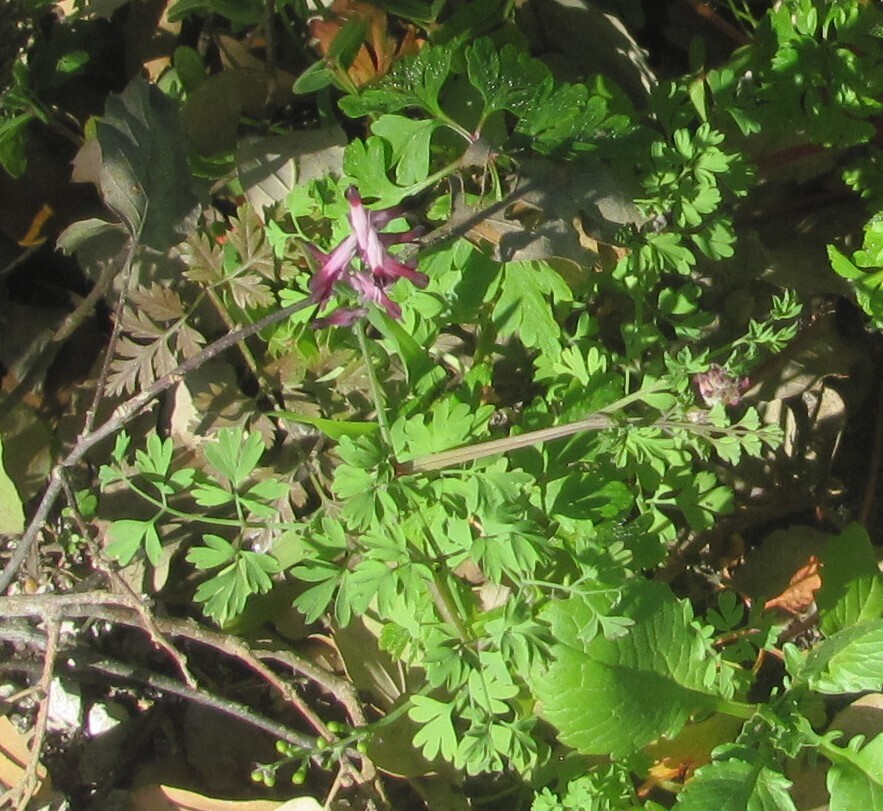
Common fumitory
- Origin
- Europe
- Part used
- Leaves
- Tradition
- Traditional ethnobotany
A discreet herb of fields and neglected gardens, common fumitory was long gathered by European herbalists for its depurative virtues. Its very name, derived from the Latin ‘fumus terrae’ — smoke of the earth — evokes the lightness of its bluish foliage and the age of its use, already mentioned in medieval treatises.
Traditional uses
Skin conditions and irritated skin
Fumitory was traditionally used externally to soothe skin prone to eczema or blemishes, often as a lotion or compress.
Support for the liver and digestion
Considered depurative, it was used as a tea to help with periods of difficult digestion and to support liver and bile function.
A spring depurative cure
In European folk tradition, fumitory featured in seasonal 'cleansing' cures, combined with other bitter or diuretic plants.
Traditional use for mild circulatory support
Some old-time herbalists attributed to it a mild effect on blood circulation, though this use is not as well documented as its depurative applications.
Before you use it
A plant containing active alkaloids: do not exceed the traditional indicative doses, and avoid prolonged use without professional advice. Not advised for pregnant or breastfeeding women, nor for young children, in the absence of sufficient safety data. To be avoided in cases of biliary (gallstones) or liver disorders without medical advice, due to its action on bile secretion. Possible interactions with certain medications; seek advice from a pharmacist or doctor if on treatment.
The detailed notebook
- Prepared as a paste or decoction
- Traditional duration of use
- Known contraindications
- Related species and their uses
Where to find it
Partner herbalists — available with the detailed notebook.
Sources
PFAF, Wikipedia