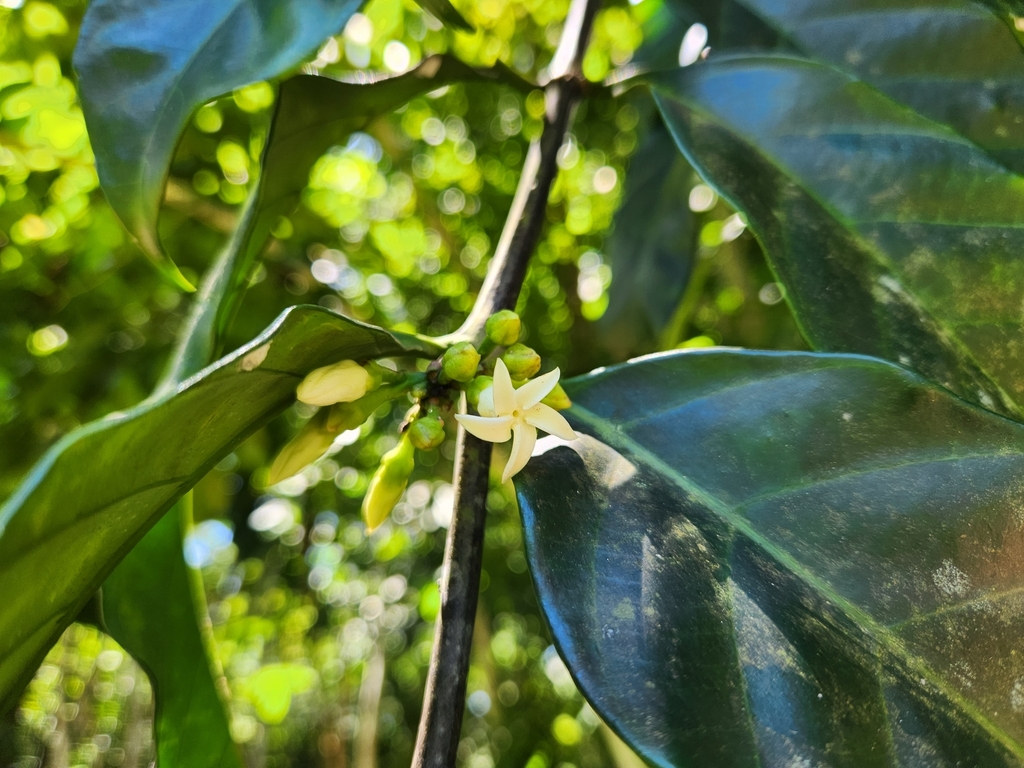
Funtumia elastica
- Origin
- Africa
- Part used
- See detailed notebook
- Tradition
- Traditional ethnobotany
A latex-bearing tree of the humid forests of West and Central Africa, Funtumia elastica was once exploited for its natural rubber before the rise of the rubber tree (Hevea). In forest traditions, its bitter bark held a special place in local pharmacopeias, reserved for specific uses passed down with caution.
Traditional uses
Traditional digestive bitter
The bark, known to be strongly bitter, was used in very small amounts in certain West African traditions to stimulate appetite and support digestion.
Use against feverish states
Bark decoctions have traditionally been used in certain regions to help with episodes of fever, as part of local folk medicine practices.
Reported vermifuge use
Some ethnobotanical sources mention a use of the bark as a traditional vermifuge, always at very measured doses due to its potential toxicity.
Latex applied locally
The tree's latex, once harvested for rubber, was sometimes applied locally in certain traditional practices, particularly on wounds or skin irritations.
What to know before use
The bark and latex of Funtumia elastica contain compounds whose toxicity is documented; any internal use must imperatively be supervised by a qualified professional. Use strictly not recommended for pregnant or breastfeeding women, as well as in children, in the absence of sufficient safety data. Never self-administer a preparation made from this plant without the advice of an experienced herbalist or practitioner who knows the precise dosages. Interactions with ongoing medications are not documented with certainty; caution requires avoiding any combination without medical advice.
The detailed notebook
- Prepared as a paste or decoction
- Traditional duration of use
- Known contraindications
- Related species and their uses
Where to find it
Partner herbalists — available with the detailed notebook.
Sources
Wikipedia