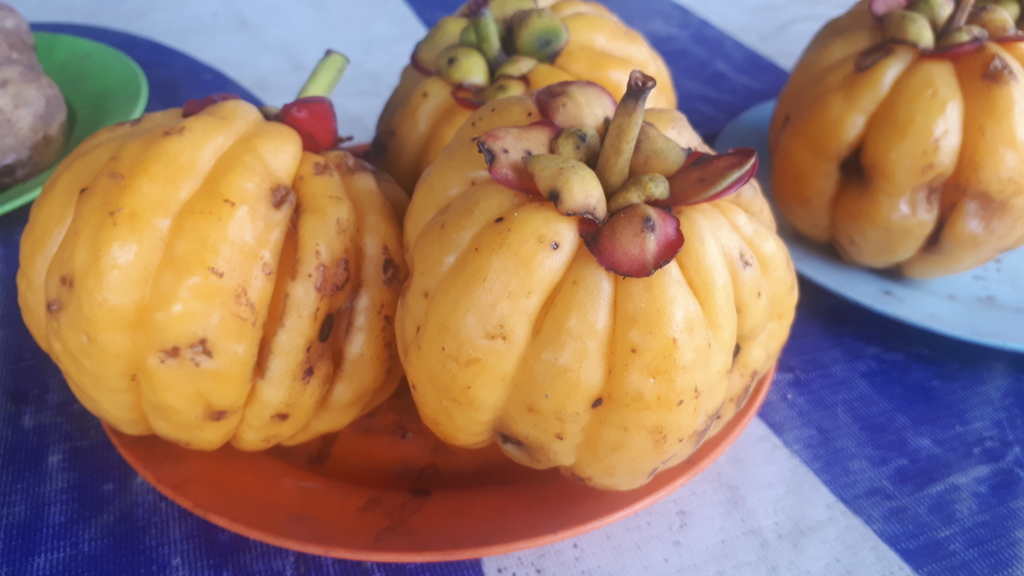
Garcinia atroviridis
- Origin
- Asia
- Part used
- See detailed notebook
- Tradition
- Traditional ethnobotany
Garcinia atroviridis, a fruit tree of Southeast Asia's damp forests, produces a tangy fruit sometimes called "asam gelugur" in Malaysia. For generations, its dried slices have flavored curries and soups while holding a discreet place in local traditional uses. Its bark and fruit are reputed for their pronounced acidity, long associated with digestive freshness in regional kitchens and pharmacopeia.
Traditional uses
Traditional digestive support
The dried fruit slices were traditionally added to dishes or infused to accompany heavy meals, reputed to aid digestion according to Malay and Thai folk uses.
A souring agent and freshness enhancer
Used as a substitute for tamarind in traditional cooking, the dried fruit was also consumed as a watery preparation to soothe feelings of heaviness after meals.
A traditional refreshing drink
A decoction of the dried fruit, sometimes sweetened, was drunk in Southeast Asia as a refreshing drink during periods of intense heat, according to folk tradition.
Reported traditional postpartum use
Certain regional traditions report a use of the fruit in preparations intended for women after childbirth, a poorly documented use that calls for caution.
What to know before use
Avoid large-quantity consumption during pregnancy and breastfeeding, for lack of sufficient safety data. People undergoing medication treatment, particularly for blood sugar or lipid metabolism, should consult a health professional before use, due to potential interactions. Prolonged use or concentrated preparation is not recommended without the advice of a qualified practitioner, as long-term safety data are limited. Do not give to young children without prior medical advice.
The detailed notebook
- Prepared as a paste or decoction
- Traditional duration of use
- Known contraindications
- Related species and their uses
Where to find it
Partner herbalists — available with the detailed notebook.
Sources
PFAF