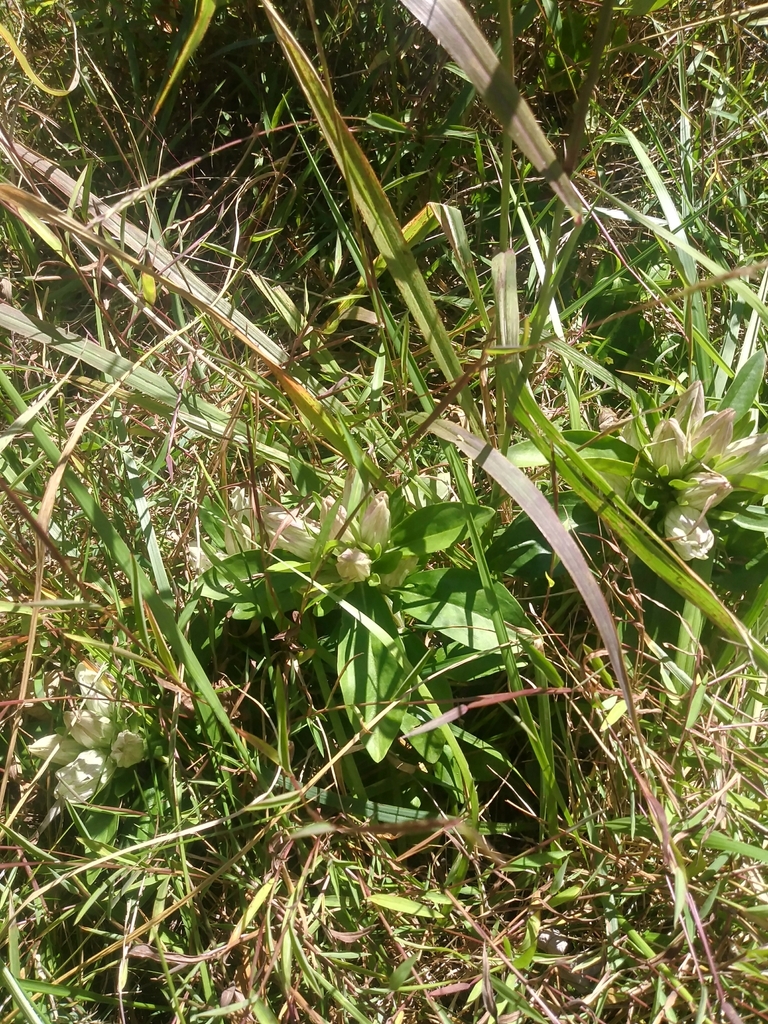
Gentiana villosa
- Origin
- North America
- Part used
- Root
- Tradition
- Traditional ethnobotany
In the humid woodlands of North America, Gentiana villosa, with its unassuming, late-blooming flower, was long gathered by traditional herbalists for its bitter root. A cousin of the great European gentians, it shares with them a long-standing reputation as a digestive tonic, passed down through apothecaries' notebooks and folk knowledge.
Traditional uses
A bitter tonic before meals
The bitter root of Gentiana villosa was traditionally used to stimulate the appetite and promote digestive secretions, in the manner of other bitter gentians.
Support for slow digestion
It was credited with the ability to relieve feelings of heaviness after meals and difficult digestion, taken in small amounts before or after meals.
A traditional strengthening tonic for convalescence
In North American folk pharmacopoeia, the dried root was included in tonic preparations meant to restore strength after a period of fatigue or illness.
An old use against mild fevers
Certain traditions report a use of the root, as a light decoction, to accompany feverish states, like other bitter gentianaceae.
Before you use it
Avoid in cases of stomach ulcer, reflux, or hyperacidity, as the bitterness may aggravate these conditions. Not recommended during pregnancy and breastfeeding in the absence of sufficient data. Use discouraged in children without the advice of a health professional. Seek the advice of a herbalist or doctor if undergoing medication treatment, particularly for digestive disorders.
The detailed notebook
- Prepared as a paste or decoction
- Traditional duration of use
- Known contraindications
- Related species and their uses
Where to find it
Partner herbalists — available with the detailed notebook.
Sources
PFAF, Wikipedia