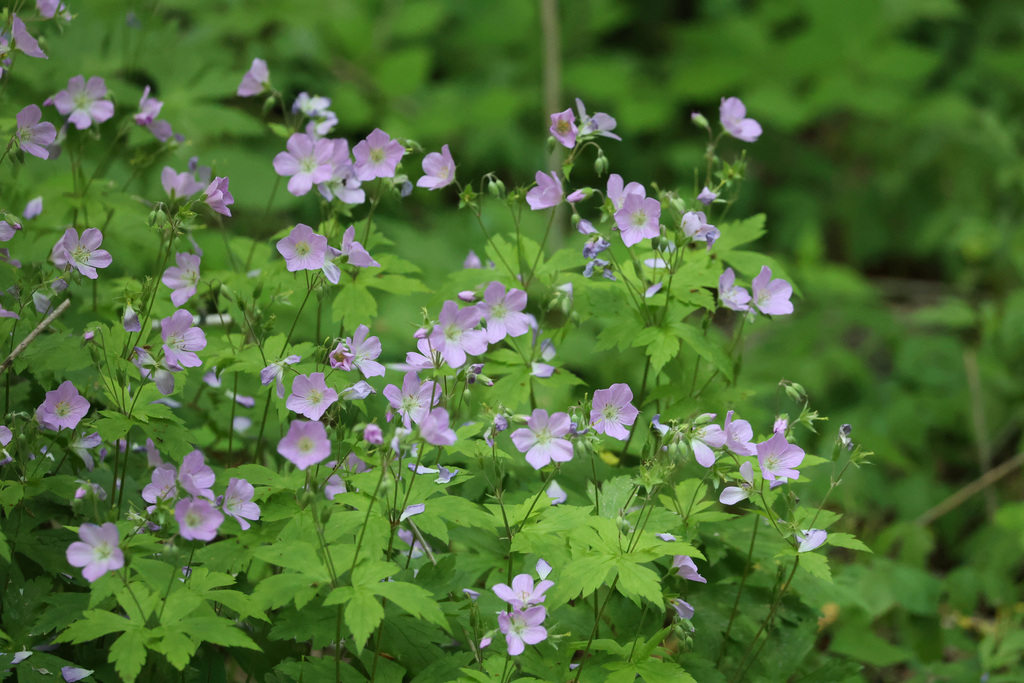
Geranium maculatum
- Origin
- North America
- Part used
- See detailed notebook
- Tradition
- Traditional ethnobotany
Spotted geranium, which the Amerindians of North America sometimes called "alum root" for its extraordinary astringent power, grew discreetly in the shade of the woodlands. Colonial herbalists quickly adopted it, inheriting the uses passed down by Indigenous peoples, to soothe irritated mucous membranes and tighten tissue.
Traditional uses
Easing mild diarrhea
The root, rich in tannins, was traditionally used as a decoction to tighten the intestinal mucous membranes in cases of passing digestive trouble.
Care for minor wounds and irritation
As a compress or wash, the root decoction was used to clean and tighten skin tissue for small cuts, irritation, or superficial bleeding.
A gargle for gums and throat
Amerindians and settlers used a root gargle to calm inflammation of the mouth, gums, and throat.
A traditional use for heavy periods
The root was sometimes used as a decoction for its supposed astringent effect, considered useful for heavy menstrual flow, a reported use to be approached with caution.
Before you use it
Prolonged or high-dose use can cause constipation or digestive irritation owing to the high tannin content. Discouraged without the advice of a health professional during pregnancy and breastfeeding, for lack of sufficient data. Prolonged internal use is not recommended without supervision, particularly in cases of preexisting liver or kidney trouble. Seek professional advice before any use in children.
The detailed notebook
- Prepared as a paste or decoction
- Traditional duration of use
- Known contraindications
- Related species and their uses
Where to find it
Partner herbalists — available with the detailed notebook.
Sources
PFAF