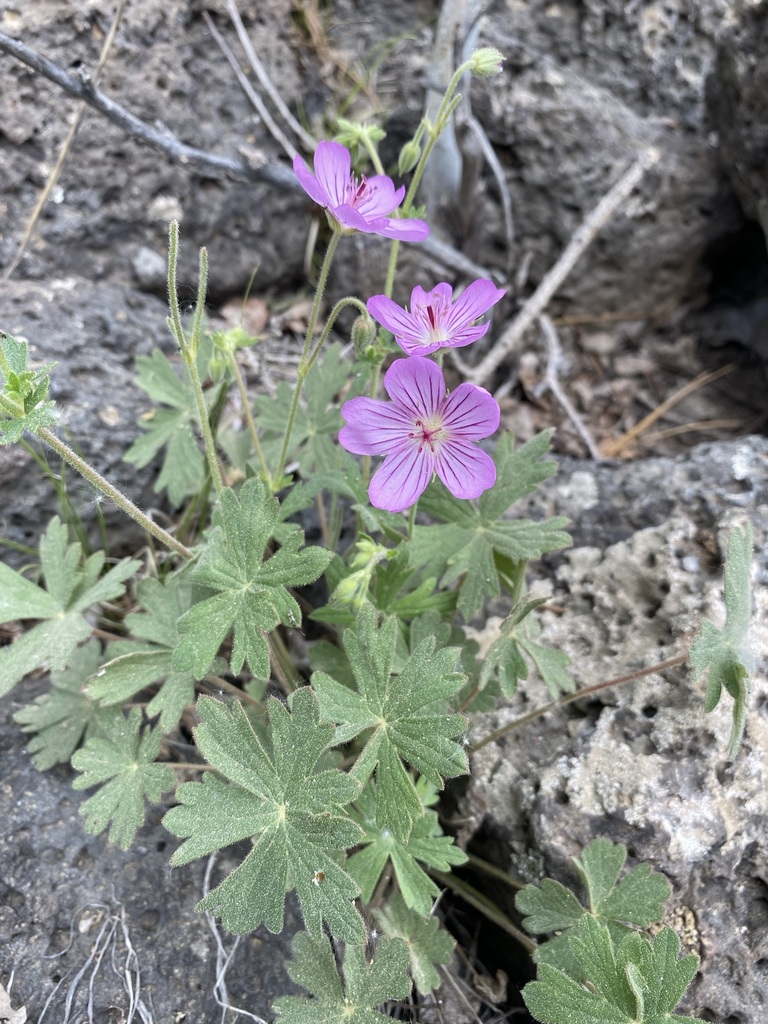
Geranium viscosissimum
- Origin
- North America
- Part used
- Leaves, Root
- Tradition
- Traditional ethnobotany
Sticky geranium grows in the prairies and open woodlands of the North American West, where several Indigenous peoples made it a remedy of oral tradition, passed down through generations. Rich in tannins, its root in particular was reputed for its astringent virtues, used long before the arrival of European settlers.
Traditional uses
Soothing the throat and airways
The root decoction was traditionally used as a gargle or drink to relieve throat irritation and mild respiratory ailments, thanks to its high content of astringent tannins.
A soothing eye wash
A light infusion of leaves, carefully filtered, was traditionally used as an eye bath to soothe irritated or tired eyes.
Care for minor wounds
Crushed leaves or a compress were applied to superficial cuts and skin irritation, in keeping with the astringent, drying use recognized among several wild geraniums.
A traditional digestive astringent
The root, rich in tannins, was sometimes consumed as a light decoction for its tightening effect, traditionally associated with minor digestive troubles such as loose stools.
Before you use it
A traditional use poorly documented by modern research: to be approached with caution and reserved for occasional use. Avoid any unfiltered eye bath with the greatest care, at risk of irritation; when in doubt, consult a health professional. Not advised for pregnant or breastfeeding women and young children, for lack of sufficient data. If taken over a prolonged period or while undergoing medication treatment, seek the advice of a health professional before use.
The detailed notebook
- Prepared as a paste or decoction
- Traditional duration of use
- Known contraindications
- Related species and their uses
Where to find it
Partner herbalists — available with the detailed notebook.
Sources
PFAF, Wikipedia