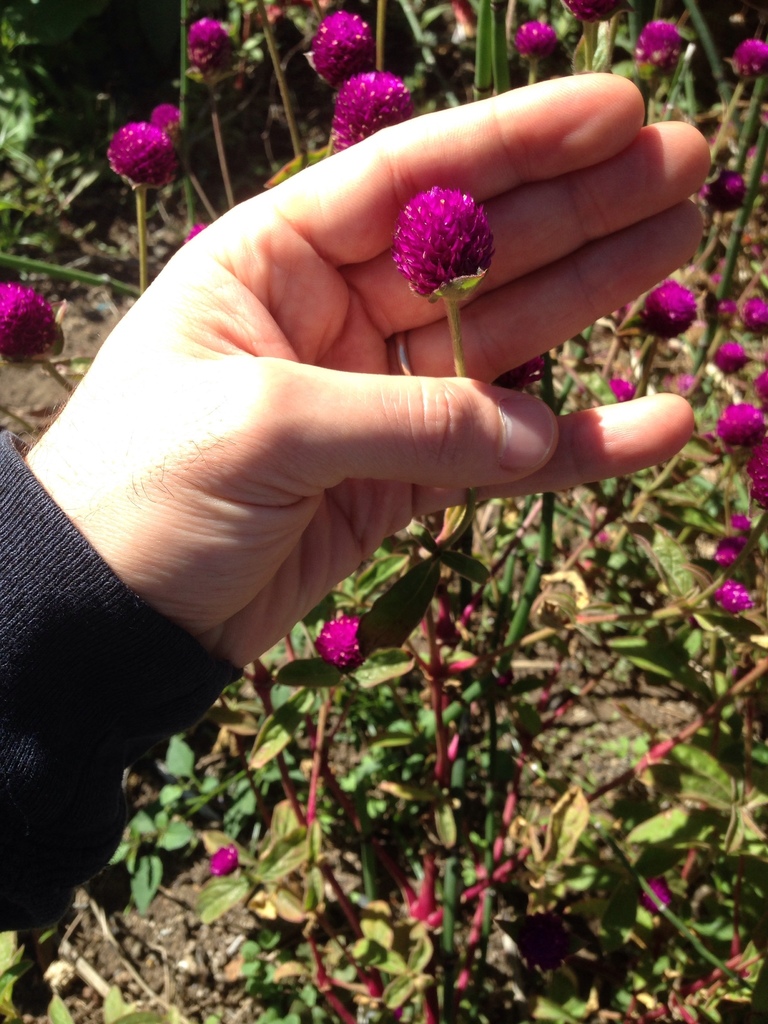
Gomphrena globosa
- Origin
- South America
- Part used
- See detailed notebook
- Tradition
- Traditional ethnobotany
Native to the warm lands of South America, the globe amaranth, also known as Gomphrena globosa, was cultivated for its purple flower heads that keep their color long after picking, earning it a prized place in gardens and folk remedies. Old herbalists of Central America and Southeast Asia used it both as an ornamental and as a tea, crediting its dried flowers with soothing and refreshing virtues.
Traditional uses
Soothing cough and throat
In Southeast Asia as in certain South American traditions, an infusion of dried flowers was offered to calm coughing and soothe throat irritation.
Promoting peaceful sleep
The dried flower heads went into evening teas, reputed to be soothing for the mind after a busy day.
Accompanying the female cycle
Some folk traditions credited this plant with a role in accompanying menstrual troubles, a use that remains scientifically under-documented and should be approached with caution.
Cooling in case of fever
A light decoction was sometimes used traditionally to accompany feverish states, as a way of cooling the body.
What to know before use
A scientifically under-studied traditional use: seek the advice of a health professional before any internal use. Not recommended for pregnant or breastfeeding women, owing to an unvalidated and potentially risky traditional use linked to the female cycle. Do not administer to young children without medical advice. If under ongoing medication treatment, seek advice before any intake, for lack of data on possible interactions.
The detailed notebook
- Prepared as a paste or decoction
- Traditional duration of use
- Known contraindications
- Related species and their uses
Where to find it
Partner herbalists — available with the detailed notebook.
Sources
PFAF