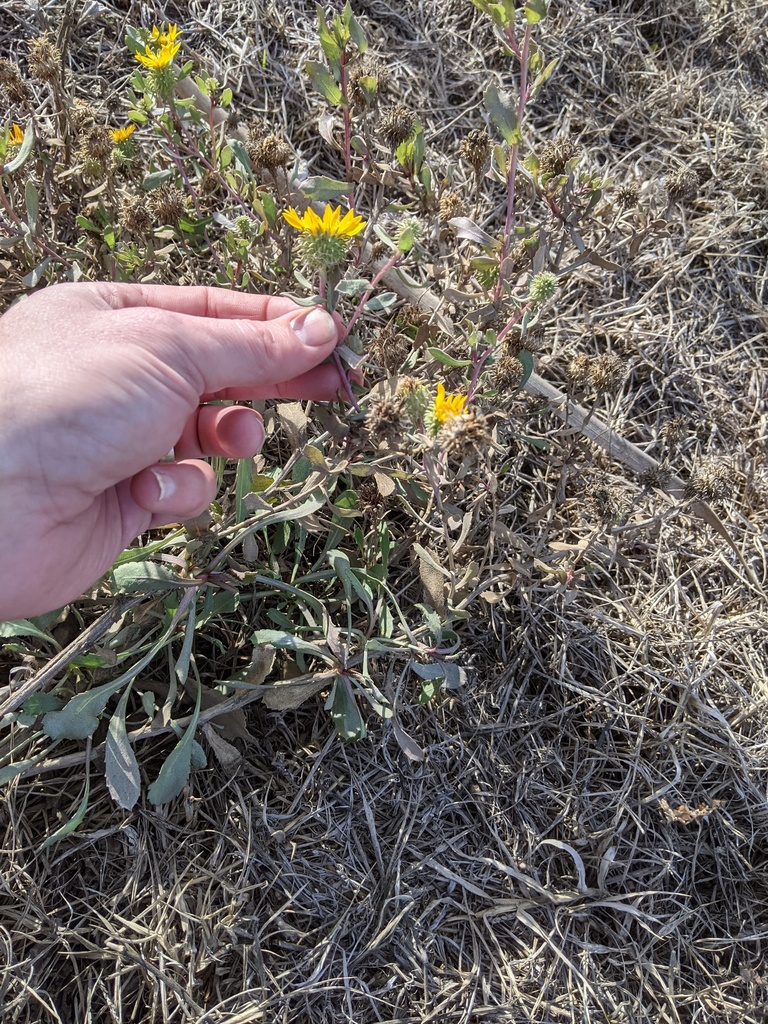
Grindelia camporum
- Origin
- North America
- Part used
- See detailed notebook
- Tradition
- Traditional ethnobotany
On the great arid plains of the North American West, Grindelia camporum spreads its resinous yellow flowers along dry paths. Amerindian healers, notably among the peoples of the plains and California, gathered its flowering tops for their recognized virtues on the respiratory tract. Nineteenth-century settlers and eclectic physicians in turn adopted this hardy plant, incorporating it into North American folk pharmacopoeias.
Traditional uses
Traditional support for the bronchi
The flowering tops of grindelia were traditionally used to help with persistent coughs and bronchial ailments, particularly during asthma-like episodes.
Soothing skin irritation
Externally, grindelia poultices or lotions were reputed to calm irritation from contact with stinging plants, such as poison ivy.
A bitter digestive use
Certain herbalist traditions report a use of the plant as a bitter, taken in small amounts to support digestion.
A rarer traditional use
A few old sources mention an occasional use for women's troubles, a use that is nonetheless poorly documented and to be approached with great caution.
Before you use it
Do not use without the advice of a health professional, particularly in cases of kidney disease, as the plant is rich in resinous compounds that can strain the kidneys. Discouraged during pregnancy and breastfeeding, for lack of sufficient safety data. Possible interactions with ongoing treatments (cardiac, diuretic); seek advice before any prolonged use. Avoid use in children without the supervision of a qualified practitioner.
The detailed notebook
- Prepared as a paste or decoction
- Traditional duration of use
- Known contraindications
- Related species and their uses
Where to find it
Partner herbalists — available with the detailed notebook.
Sources
PFAF