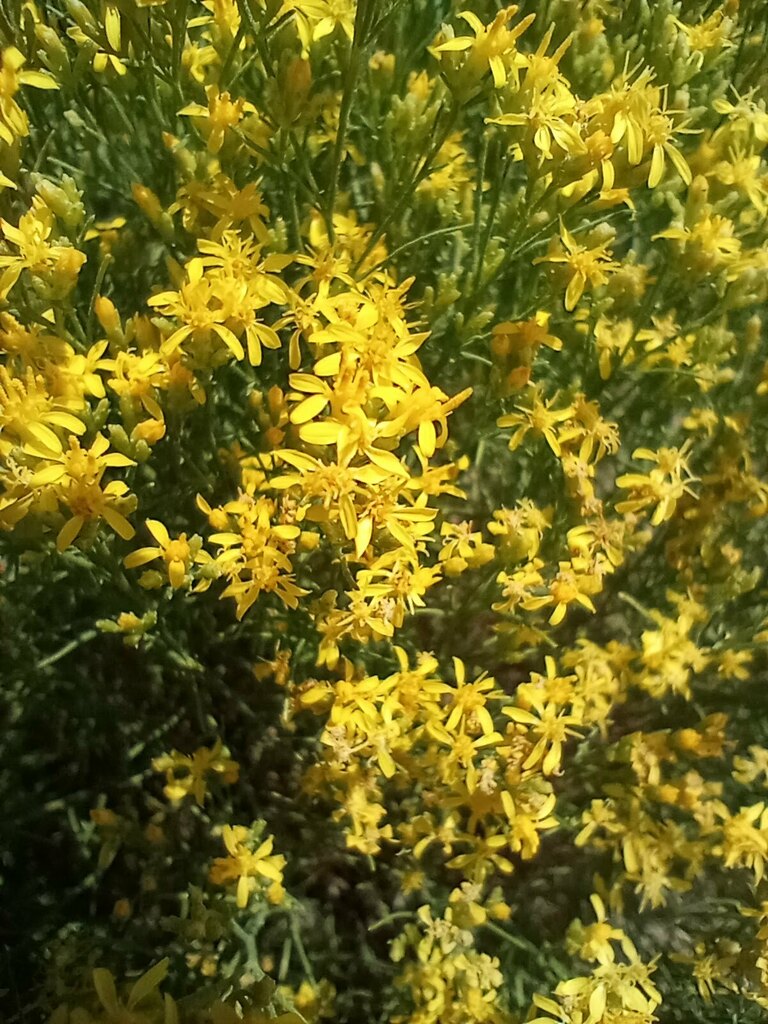
Gutierrezia sarothrae
- Origin
- North America
- Part used
- Flowers
- Tradition
- Traditional ethnobotany
On the high arid plains of North America, Gutierrezia sarothrae, a modest shrub with yellow flowers, had long been known to several Indigenous peoples of the Southwest, notably the Navajo and the Zuni. It was found mixed into herbs for ritual and household remedies, reserved for precise, measured uses.
Traditional uses
Traditional relief of stomach ache
The flowers were sometimes prepared as a light infusion to ease minor digestive trouble, according to uses reported among certain Indigenous peoples of the American Southwest.
Application to stings and irritation
A decoction or poultice of flowers was traditionally applied to the skin to calm insect stings and certain skin irritation.
A traditional use linked to the female cycle
Some ethnobotanical sources report a traditional use of the plant in connection with menstrual trouble, a use to be approached with the greatest caution given how limited its documentation remains.
Traditional ceremonial fumigation
The dried plant was sometimes burned during ceremonies, a use more ritual than therapeutic, attested in certain Navajo traditions.
Before you use it
A plant poorly documented scientifically: to be reserved for occasional traditional use, not regular self-medication. Certain species of the genus Gutierrezia are reputed toxic to livestock and could present a cumulative toxicity; caution is therefore warranted in humans. Discouraged during pregnancy and breastfeeding owing to a traditional use reported in connection with the female cycle, with a potential abortifacient risk. It is essential to consult a health professional or an experienced herbalist before any internal use, for lack of reliable data on dosages and possible interactions.
The detailed notebook
- Prepared as a paste or decoction
- Traditional duration of use
- Known contraindications
- Related species and their uses
Where to find it
Partner herbalists — available with the detailed notebook.
Sources
PFAF, Wikipedia