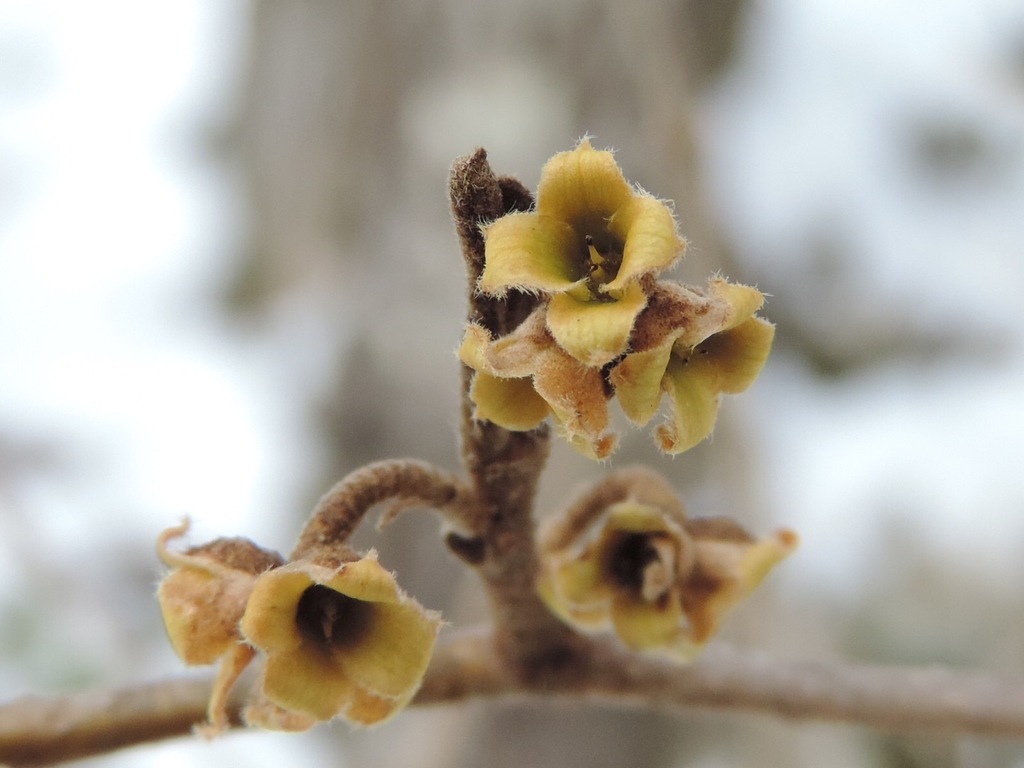
Witch Hazel
- Origin
- North America
- Part used
- Seeds/fruits, Stem
- Tradition
- Traditional ethnobotany
Among the Indigenous peoples of North America, witch hazel was revered as a healing shrub, its flexible branches even used as divining rods. European settlers learned its use from the Iroquois and Algonquin nations, who prepared bark and leaves as soothing decoctions for the skin and bruises. Even today, its distilled water remains one of the plant remedies most present in family medicine cabinets.
Traditional uses
Soothing bruises and sprains
A decoction of stem and bark was traditionally applied as a compress to bruised, contused, or slightly swollen areas, to soothe the sensation of heat and tension.
Care for irritated skin
Amerindian tribes used stem decoctions to calm skin irritation, insect stings, and minor superficial wounds.
Freshness for heavy legs
Witch hazel water was traditionally dabbed on the legs at the end of the day to provide a sensation of lightness and freshness.
Compresses after childbirth
In North American folk tradition, witch hazel compresses were used as a local care to provide freshness and comfort in the period following childbirth.
Before you use it
Traditional external use only for preparations made from stem and bark; avoid any prolonged contact on damaged skin without professional advice. Do not ingest concentrated decoctions, rich in tannins, without supervision, owing to the risk of digestive irritation. Avoid in pregnant or breastfeeding women and young children, for lack of sufficient data on internal use. Perform a preliminary skin test, as some sensitive skin may react to the tannins present in the plant.
The detailed notebook
- Prepared as a paste or decoction
- Traditional duration of use
- Known contraindications
- Related species and their uses
Where to find it
Partner herbalists — available with the detailed notebook.
Sources
PFAF, Wikipedia