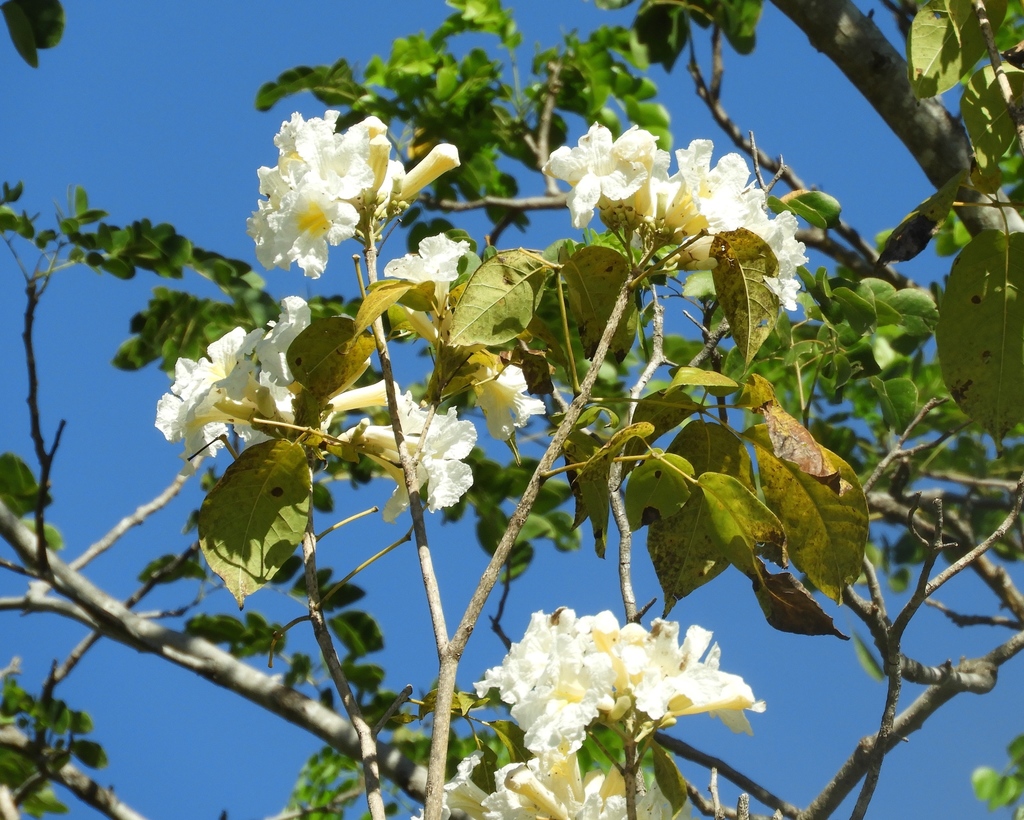
Handroanthus impetiginosus
- Origin
- South America
- Part used
- See detailed notebook
- Tradition
- Traditional ethnobotany
Beneath the canopies of South America, the Pau d'Arco — or Lapacho — raises its reddish bark, esteemed for centuries among Andean and Amazonian peoples for its fortifying properties. Traditional healers drew bitter decoctions from it, passed down through generations as a remedy for robustness. Even today, its inner bark remains one of the most sought-after materials in the South American folk pharmacopoeia.
Traditional uses
Traditional vitality support
The inner bark of Lapacho was traditionally prepared as a decoction to support the body during periods of fatigue or convalescence.
Traditional use on the skin
Washes or compresses made from bark decoction were used on the skin to accompany various skin discomforts, following Andean and Amazonian folk practices.
A traditional digestive bitter
Owing to its pronounced bitterness, the decoction was sometimes consumed to accompany digestion, in the manner of traditional bitters.
A winter folk remedy
Lapacho is among the plants to which South American folk tradition attributed a role in supporting the body during seasonal changes.
What to know before use
Not recommended during pregnancy and breastfeeding owing to active compounds (naphthoquinones) that may pose a risk. Prolonged or high-dose use can cause digestive upset; the advice of a health professional is recommended before any course of treatment. Possible interactions with anticoagulant or anti-inflammatory treatments: seek advice from a doctor or pharmacist. Do not administer to young children without the guidance of a qualified professional.
The detailed notebook
- Prepared as a paste or decoction
- Traditional duration of use
- Known contraindications
- Related species and their uses
Where to find it
Partner herbalists — available with the detailed notebook.
Sources
PFAF, Wikipedia