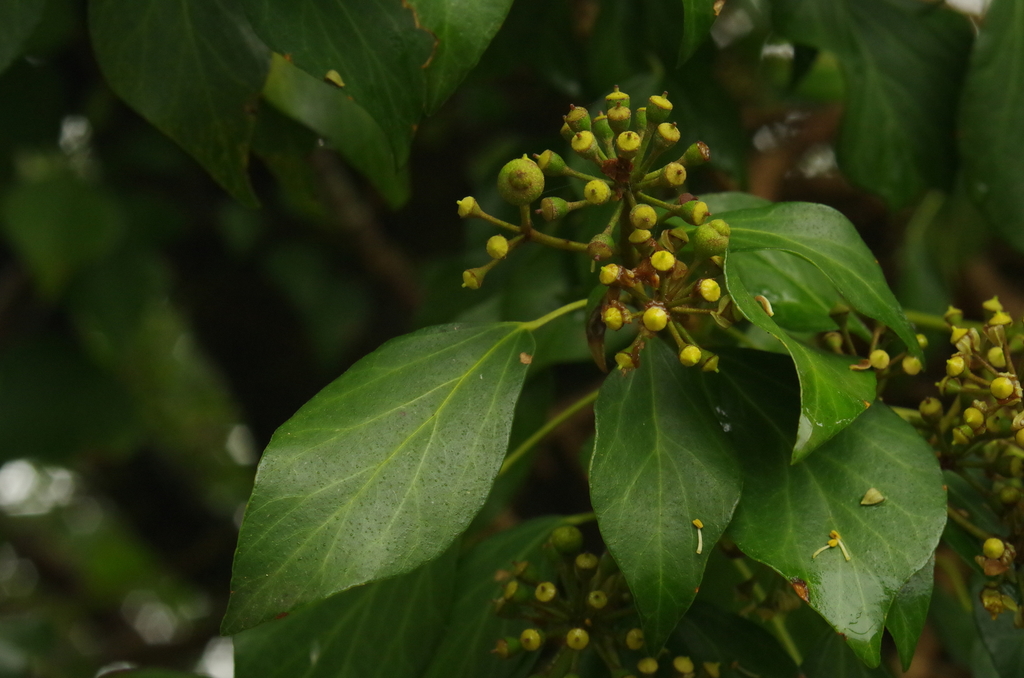
Hedera rhombea
- Origin
- Asia
- Part used
- See detailed notebook
- Tradition
- Traditional ethnobotany
Asian ivy, the eastern cousin of common European ivy, has silently climbed the rocks and old trees of Japan, Korea, and China for centuries. In the notebooks of Far Eastern herbalists, its tough, evergreen leaves were long associated with the respiratory tract, much like its western relative. A plant of shade and patience, it bears witness to a traditional knowledge still little known in the West.
Traditional uses
Traditional support for the respiratory tract
In traditional East Asian medicine, the leaves were used externally or in liquid preparations to help with episodes of chesty cough and bronchial congestion.
A soothing skin application
The crushed or infused leaves were traditionally applied as a compress to the skin to soothe certain irritation or minor skin conditions.
Friction rubs for joint pain
In certain Japanese and Korean folk practices, leaf-based preparations were used as an external rub to relieve localized muscle and joint pain.
Occasional traditional use
A more marginal use reports the use of small quantities of leaves as a decoction to support temporary digestive comfort, always at a very measured dose.
What to know before use
All parts of the plant, particularly the berries, contain saponins that can be toxic if taken orally in excessive amounts; internal use should remain exceptional and supervised. Contraindicated in pregnant or breastfeeding women, as well as young children, due to the lack of safety data. Prolonged contact with the sap or leaves may cause irritation or skin reactions in sensitive individuals; always test on a small area beforehand. Seek the advice of a health professional before any use, particularly if undergoing medication treatment, due to potentially poorly documented interactions.
The detailed notebook
- Prepared as a paste or decoction
- Traditional duration of use
- Known contraindications
- Related species and their uses
Where to find it
Partner herbalists — available with the detailed notebook.
Sources
Wikipedia