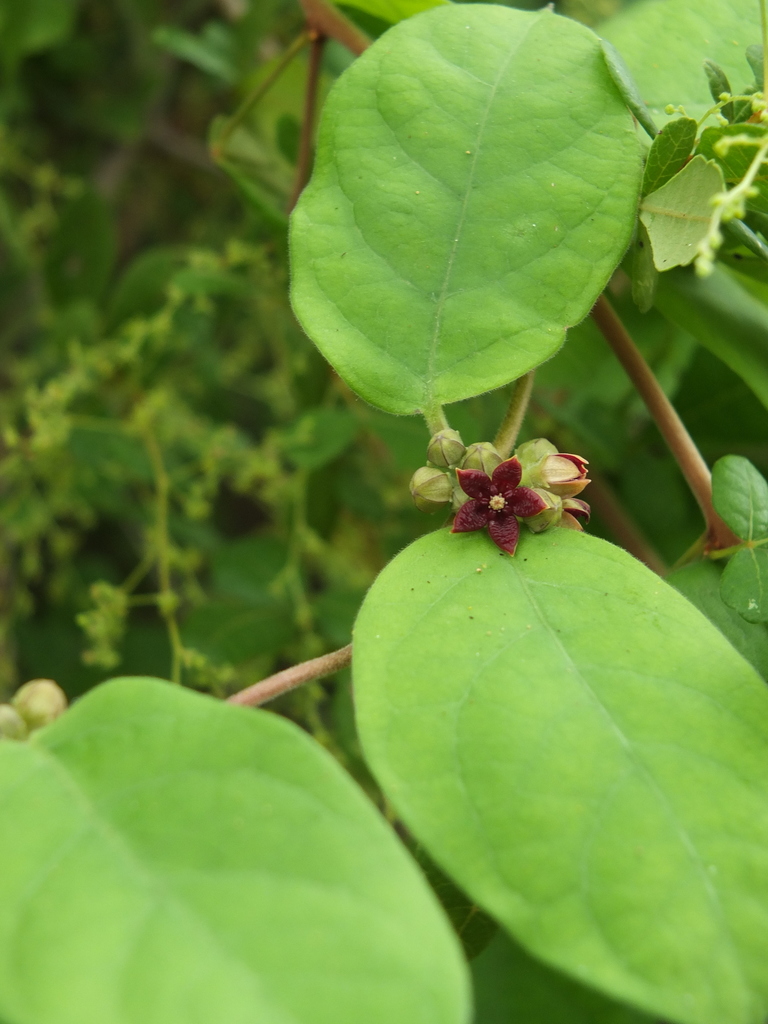
Hemidesmus indicus
- Origin
- Asia
- Part used
- Root
- Tradition
- Traditional ethnobotany
Known in India as Anantamul, this climbing vine with fragrant roots reminiscent of vanilla holds an ancient place in Ayurvedic pharmacopeia, where it was long regarded as a local substitute for sarsaparilla. Ancient Ayurvedic practitioners classified it among the cooling, depurative plants, used in numerous traditional preparations of the Indian subcontinent.
Traditional uses
Traditional digestive support
The root of Hemidesmus indicus was traditionally used to soothe mild digestive troubles and promote general intestinal comfort, in classical Ayurvedic medicine.
Skin and skin conditions
Considered blood-purifying, this root was used both internally and externally to help with skin conditions and itching in Indian folk traditions.
A cooling, depurative plant
Ayurveda classifies Anantamul among the so-called "cooling" plants, traditionally associated with cleansing the body and balancing the internal humors.
Support for the female cycle
In certain regional traditions, the root was used to help women with menstrual troubles, although this use remains less documented than the previous ones.
What to know before use
Avoid prolonged use without the advice of a health professional trained in Ayurvedic plants. As a precaution, not recommended for pregnant or breastfeeding women in the absence of sufficient data. Possible interactions with certain ongoing treatments; seek advice before combining with medication. Verify the botanical authenticity of the purchased root, as confusion with other sarsaparilla species has been reported.
The detailed notebook
- Prepared as a paste or decoction
- Traditional duration of use
- Known contraindications
- Related species and their uses
Where to find it
Partner herbalists — available with the detailed notebook.
Sources
PFAF, Wikipedia