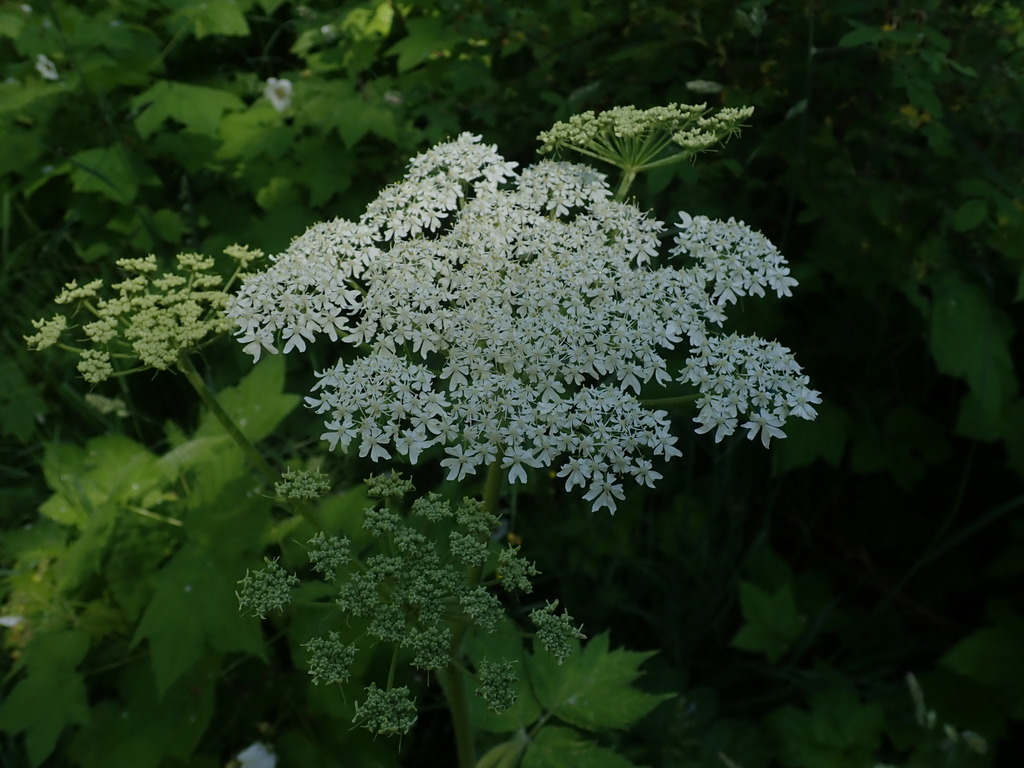
Heracleum sphondylium
- Origin
- Europe
- Part used
- See detailed notebook
- Tradition
- Traditional ethnobotany
Common hogweed, a sturdy umbellifer of Europe's meadows and woodland edges, was long regarded as both a food and a medicinal plant in the continent's countryside. Its broad, hairy leaves and white umbels made it a familiar companion of folk herbalists, who used it both at the table and for the body. Not to be confused with its far more feared cousin, giant hogweed.
Traditional uses
Support for digestion
The young shoots and seeds were traditionally eaten or infused to accompany heavy meals and support sluggish digestion.
A fortifying country plant
In parts of Europe, the root and young stems were reputed to be tonic, eaten during convalescence or seasonal fatigue.
Traditional use for catarrh
A mild root decoction was sometimes used in folk tradition to ease congested airways.
External use on minor irritations
Some rural traditions report using the leaf as a poultice for its soothing effect on minor skin irritations, though this use remains poorly documented and calls for caution.
Before you use it
The sap of common hogweed contains photosensitizing furocoumarins: any skin contact followed by sun exposure can cause burns or lasting marks; wear gloves when harvesting. Avoid confusion with giant hogweed (Heracleum mantegazzianum), far more toxic on contact, as well as with other dangerous umbellifers such as hemlock. Discouraged for pregnant or breastfeeding women, and for young children, for lack of sufficient data. Seek the advice of a health professional or an experienced herbalist before any prolonged internal use, particularly if taking photosensitizing medication.
The detailed notebook
- Prepared as a paste or decoction
- Traditional duration of use
- Known contraindications
- Related species and their uses
Where to find it
Partner herbalists — available with the detailed notebook.
Sources
Wikipedia