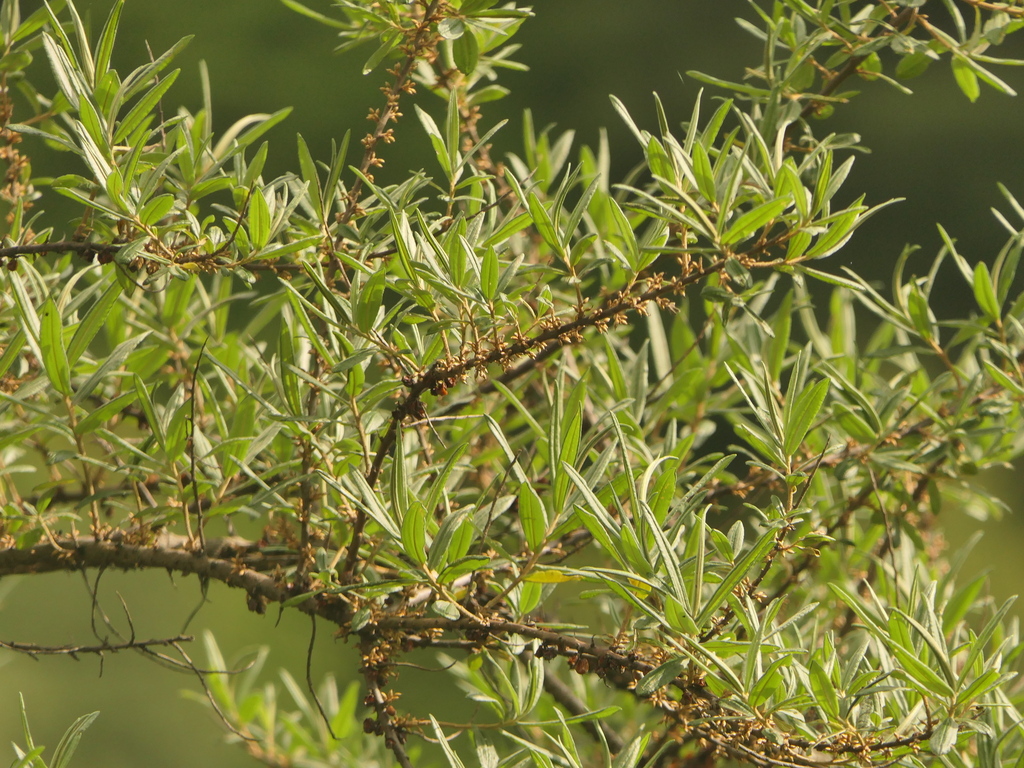
Hippophae salicifolia
- Origin
- Asia
- Part used
- See detailed notebook
- Tradition
- Traditional ethnobotany
The Himalayan cousin of sea buckthorn, Hippophae salicifolia grows on the steep slopes of Nepal and northern India, where mountain populations have long harvested its tangy berries and bark. The elders of these regions attributed fortifying virtues to it, passed down from generation to generation in local herbalist notebooks.
Traditional uses
A traditional fortifier of the highlands
The berries were traditionally consumed by mountain populations to support vitality during the harsh Himalayan winters.
Traditional skin care
The oil drawn from the berries and seeds was applied locally to soothe skin dried or damaged by cold and wind.
An ancestral digestive use
An infusion of the berries was sometimes drunk after meals to aid digestion, according to local folk uses.
Traditional throat support
The berry juice, mixed with hot water and sometimes honey, was traditionally used to soothe irritated throats.
What to know before use
Avoid in cases of coagulation disorders or anticoagulant treatment, as sea buckthorn and its cousins may influence blood fluidity. Not recommended without medical advice for pregnant or breastfeeding women, for lack of sufficient data. May cause mild digestive trouble if fresh berries or concentrated juice are consumed in excess. The use of the bark or leaves, less documented, should remain under the supervision of a health professional or experienced herbalist.
The detailed notebook
- Prepared as a paste or decoction
- Traditional duration of use
- Known contraindications
- Related species and their uses
Where to find it
Partner herbalists — available with the detailed notebook.
Sources
PFAF