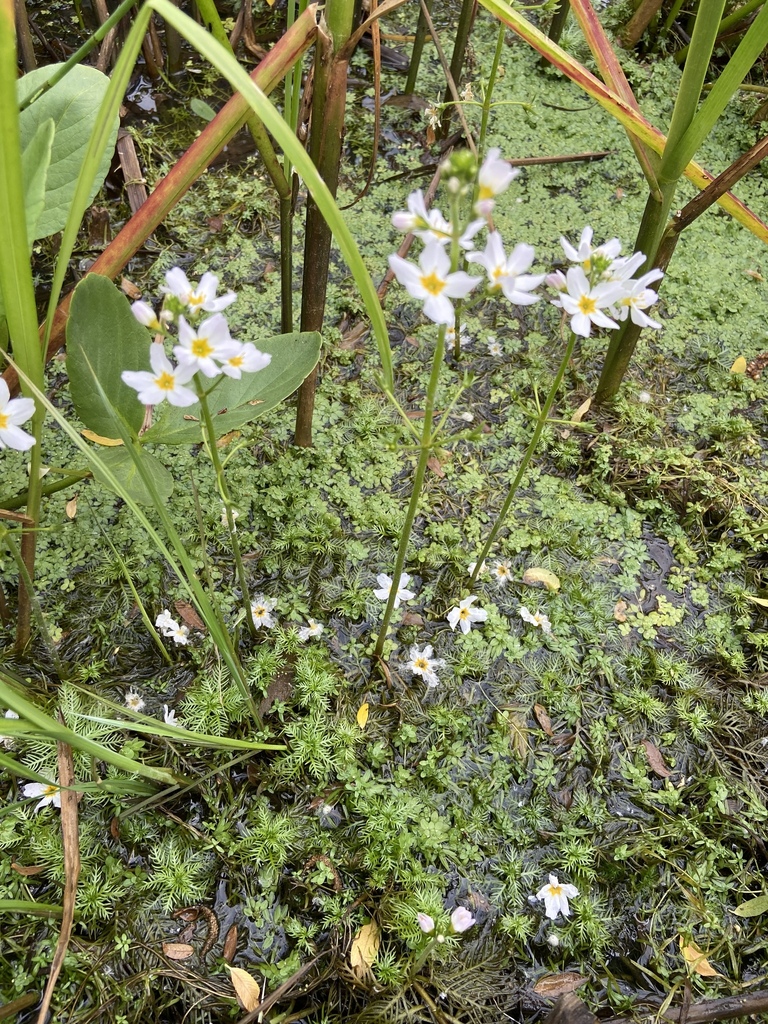
Hottonia palustris
- Origin
- Europe
- Part used
- See detailed notebook
- Tradition
- Traditional ethnobotany
An unassuming resident of Europe's still waters and ditches, water violet (Hottonia palustris) has scarcely featured in traditional herbalist notebooks. Its pale flowers, emerging just above the water's surface, have caught the attention of naturalists and aquarium gardeners far more than that of country healers.
Traditional uses
A plant of ponds and pools
Water violet is traditionally grown in ponds and aquariums for its feathery foliage and delicate flowers, valued more as a decorative, oxygenating plant than as a remedy.
A sign of clean water
In areas where it grew naturally, country people sometimes saw its presence as a sign of clean, unpolluted water, rather than making therapeutic use of it.
No established medicinal tradition
Unlike many wetland plants, no reliable and widely established traditional internal or external use has been found for this species in European folk-herbalist sources.
Before you use it
No reliable tradition of internal use exists for this plant; ingesting it without the advice of a qualified professional is not recommended. Aquatic plants can accumulate pollutants, metals, or micro-organisms present in their environment, which represents an additional health risk. Do not confuse it with other similar-looking wetland plants, some of which may be toxic. Any use, even external, should be preceded by advice from a doctor or an experienced herbalist, given the lack of reliable documentation on this species.
The detailed notebook
- Prepared as a paste or decoction
- Traditional duration of use
- Known contraindications
- Related species and their uses
Where to find it
Partner herbalists — available with the detailed notebook.
Sources
PFAF