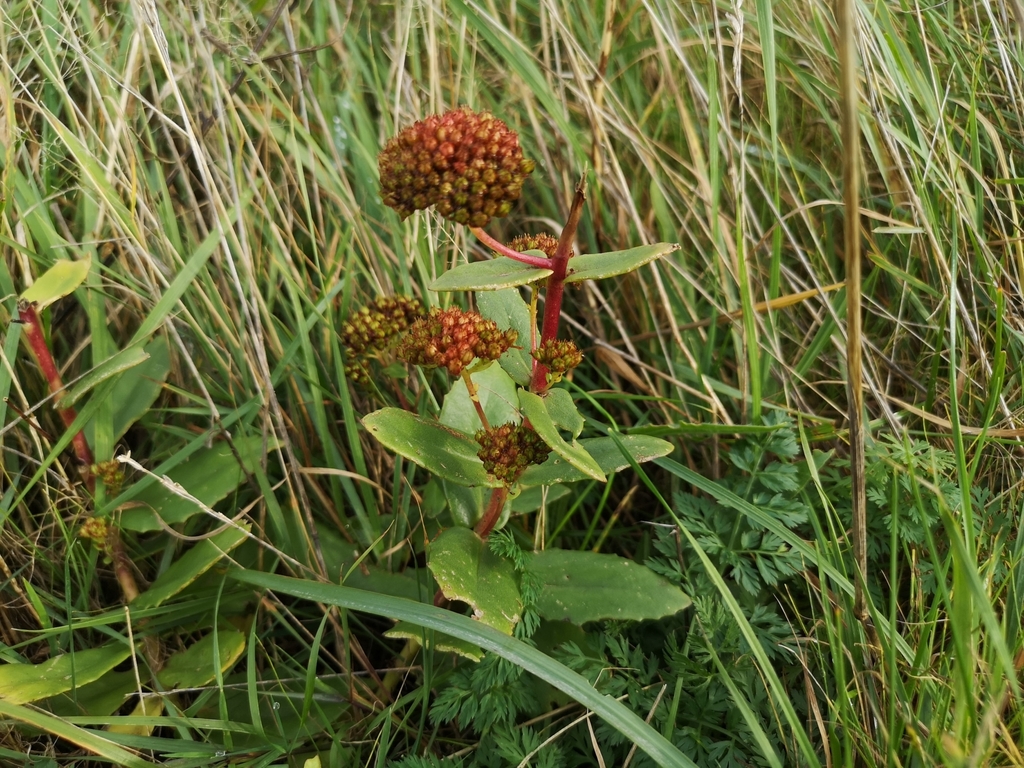
Hylotelephium telephium
- Origin
- Europe
- Part used
- See detailed notebook
- Tradition
- Traditional ethnobotany
Once known as orpine, Hylotelephium telephium (today often called Sedum telephium) grew readily around country gardens and on old walls throughout Europe. The old herbalists grew it close to their homes, ready to pick its fleshy leaves at the slightest household mishap. Its name itself — "reprise," meaning "mend" — recalls the folk use of its leaves for dressing everyday small wounds.
Traditional uses
Soothing minor wounds
The pulp of fresh, crushed leaves was traditionally applied to superficial cuts, scrapes, and minor burns to calm the sensation of heat.
Care for boils and abscesses
As a poultice, the fleshy leaf was once used to help small abscesses and boils come to a head, according to old country folk practice.
Traditional deworming use
Some rural traditions report the plant's occasional use as a gentle dewormer, though this use remains poorly documented in old sources.
Soothing skin irritations
The fresh sap was also used in light rubs to soothe skin flare-ups and insect bites.
Before you use it
Reserved for traditional external use; ingesting the fresh plant is not recommended without professional advice. Always test on a small area of skin before wider application, as some people are sensitive to the sap. Do not apply to a deep or infected wound, or to very damaged skin, without medical advice. Use is not reliably documented for pregnant or breastfeeding women or young children: best avoided as a precaution.
The detailed notebook
- Prepared as a paste or decoction
- Traditional duration of use
- Known contraindications
- Related species and their uses
Where to find it
Partner herbalists — available with the detailed notebook.
Sources
PFAF