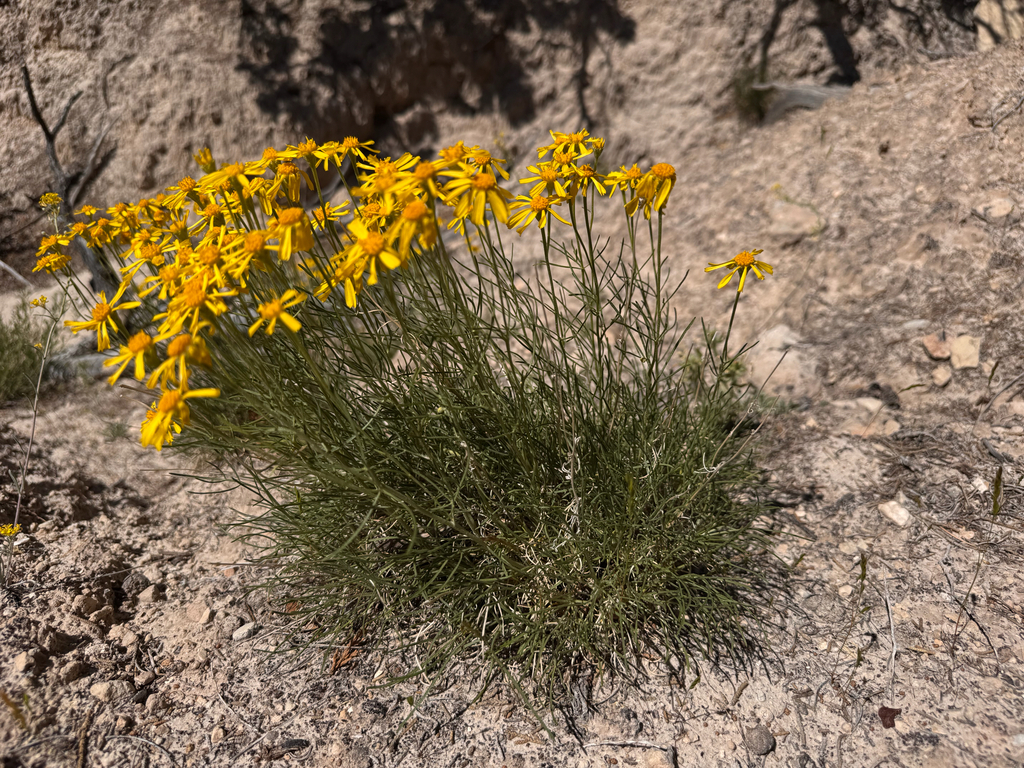
Richardson's Rubberweed
- Origin
- North America
- Part used
- Root
- Tradition
- Traditional ethnobotany
On the arid high plateaus of the North American West, Richardson's rubberweed grows discreetly among the sagebrush and dry grasses. The Indigenous peoples of desert regions, notably the Navajo, knew its uses while respecting its delicate and potentially toxic nature. This plant remains today little documented outside specialized ethnobotanical circles.
Traditional uses
A traditional use for digestive trouble
The root was sometimes used in a traditional preparation to relieve certain digestive discomfort, according to uses reported among Indigenous groups of the American Southwest.
A traditional use against diffuse pain
Some ethnobotanical sources mention a use of the root to ease bodily pain, though the precise methods remain sparsely detailed in the available literature.
A plant linked to ceremonial practices
Among certain Navajo peoples, this plant is said to have been used in a ritual or ceremonial context more than a strictly medicinal one, its use being as much symbolic as therapeutic.
Before you use it
A plant belonging to a genus recognized for its toxicity, notably in connection with compounds that can affect the liver and kidneys; any internal use must be supervised by a qualified professional. Use is entirely discouraged for pregnant or breastfeeding women, as well as children. Never self-prescribe this plant: the margin between a traditional dose and a toxic dose is poorly documented and likely narrow. In case of doubt about the plant's identification or its use, abstain and consult a herbalist or doctor.
The detailed notebook
- Prepared as a paste or decoction
- Traditional duration of use
- Known contraindications
- Related species and their uses
Where to find it
Partner herbalists — available with the detailed notebook.
Sources
PFAF, Wikipedia