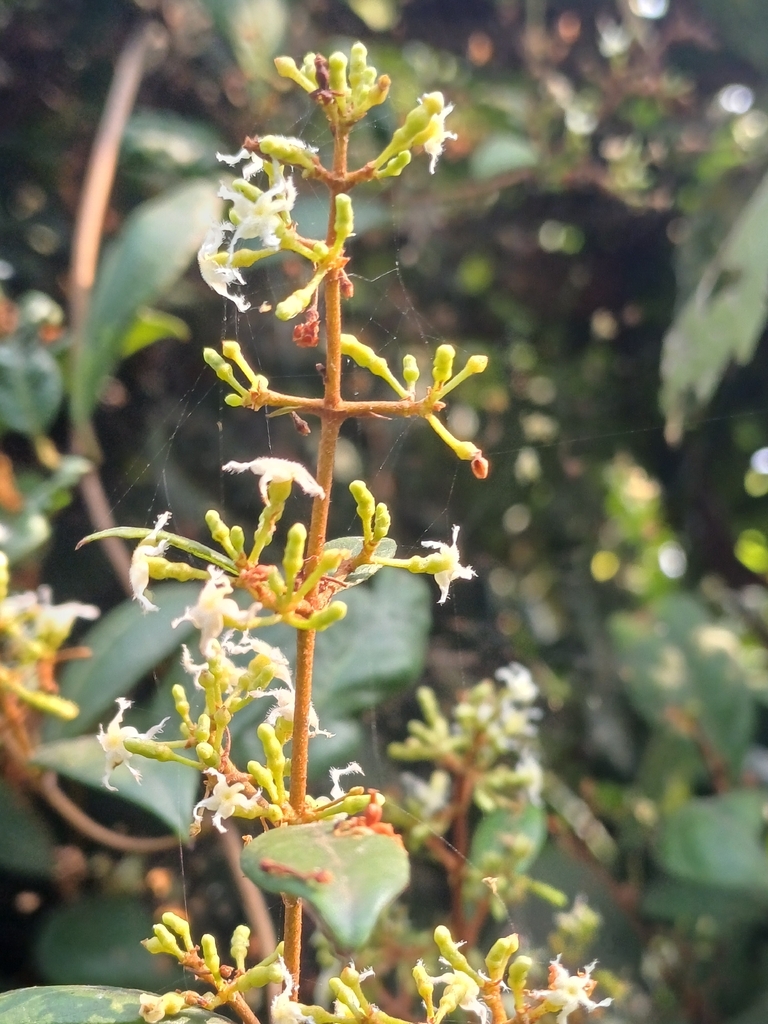
Ichnocarpus frutescens
- Origin
- Asia
- Part used
- See detailed notebook
- Tradition
- Traditional ethnobotany
Known in Indian traditions as "black sariva" or "shyama sariva," Ichnocarpus frutescens is a climbing vine of South Asia's undergrowth, often used as a substitute for or complement to true Sariva (Hemidesmus indicus). Ancient Ayurvedic practitioners classified it among the cooling, depurative plants, used for generations in the traditional preparations of the Indian subcontinent.
Traditional uses
Skin conditions and depuration
The root was traditionally used in decoctions intended to help with skin troubles, following a logic of blood purification according to ancient Ayurvedic principles.
Traditional digestive support
Used as a decoction, the plant featured among the folk remedies intended to soothe mild digestive discomfort and temporary intestinal troubles.
A traditional fever remedy
Ayurvedic texts report a use of the root as a cooling and fever-reducing agent, often combined with other bitter plants.
A traditional blood tonic
Traditionally associated with the so-called "blood-purifying" plants, it appears in certain preparations intended for general female support, though this use is not rigorously documented today.
What to know before use
Traditional use poorly documented by modern research: seek the advice of a health professional before any use. Avoid in pregnant or breastfeeding women for lack of safety data. Do not give to young children without the advice of a qualified practitioner. Possible interactions with certain ongoing treatments cannot be ruled out for lack of sufficient studies.
The detailed notebook
- Prepared as a paste or decoction
- Traditional duration of use
- Known contraindications
- Related species and their uses
Where to find it
Partner herbalists — available with the detailed notebook.
Sources
PFAF