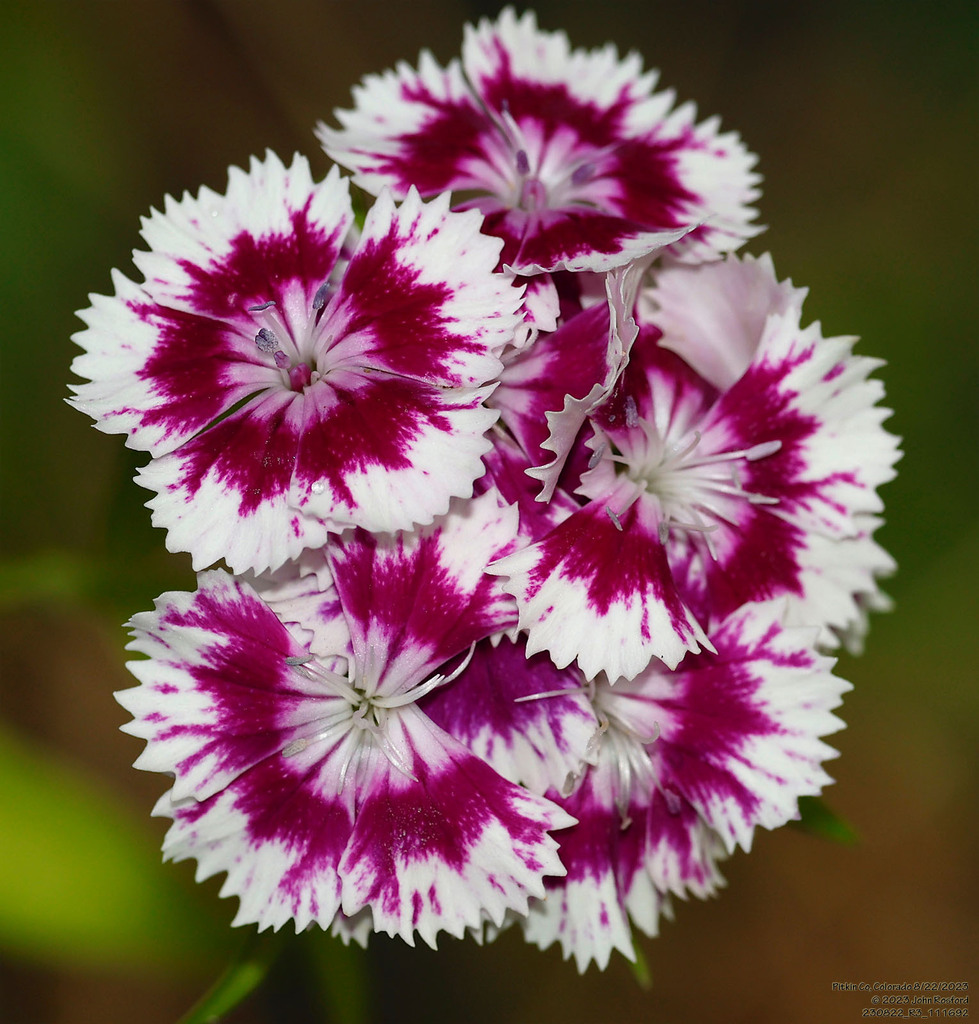
Sweet William
- Origin
- Europe
- Part used
- See detailed notebook
- Tradition
- Traditional ethnobotany
Sweet William has graced presbytery gardens and rustic borders across Europe for centuries, prized for its clusters of fragrant flowers in shifting hues. Less celebrated by herbalists than its cousin the clove pink, it nonetheless remains a plant of old gardens, grown chiefly for its ornamental charm and its sweet, spicy scent.
Traditional uses
Bouquets and garden scent
Traditionally grown in presbytery gardens for bouquets and garlands, Sweet William was prized for its delicate fragrance reminiscent of cloves.
A flower of lovers and poets
Its very name recalls the old use made of it in courtly poetry and in floral arrangements given as tokens of affection, a custom widespread in the European countryside.
Scented sachets for linen
Dried petals were sometimes slipped into sachets to scent linen in wardrobes, in the manner of traditional garden-flower potpourri.
Before you use it
This plant is very poorly documented for traditional internal use; it is best reserved for ornamental, scented, or decorative purposes. Do not ingest the flowers or any part of the plant without professional advice, given the lack of reliable data on its safety for consumption. As with many garden flowers, a risk of contact or respiratory allergy cannot be ruled out in sensitive individuals.
The detailed notebook
- Prepared as a paste or decoction
- Traditional duration of use
- Known contraindications
- Related species and their uses
Where to find it
Partner herbalists — available with the detailed notebook.
Sources
PFAF