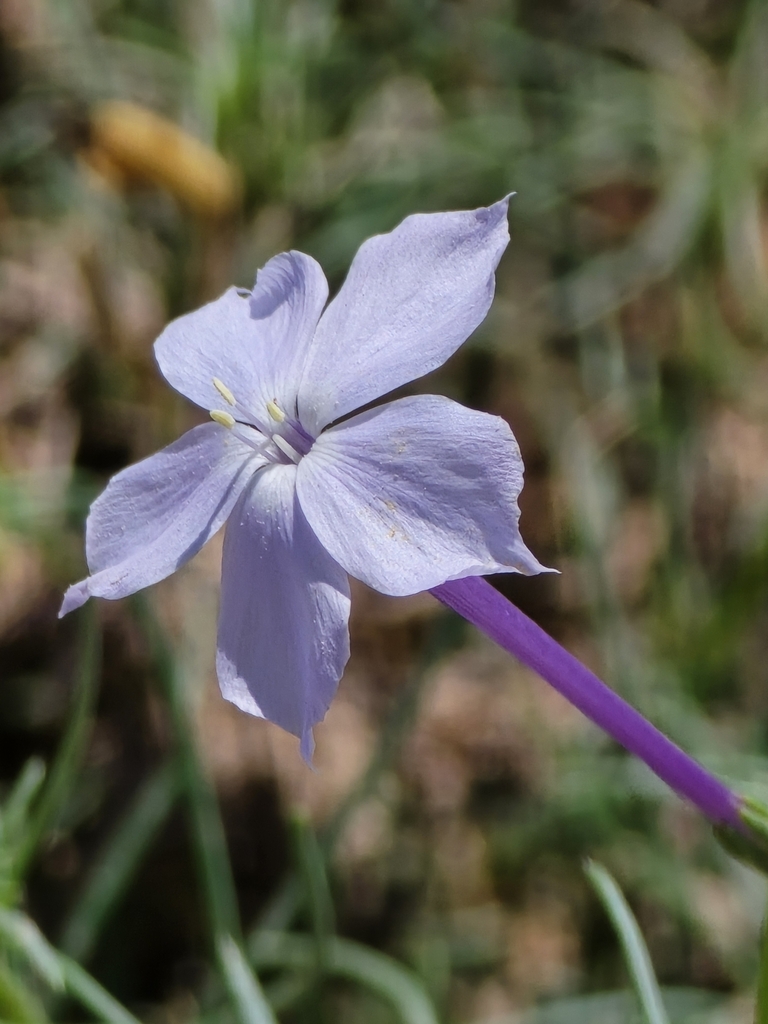
Ipomopsis longiflora
- Origin
- North America
- Part used
- Flowers
- Tradition
- Traditional ethnobotany
On the high arid plains of the American Southwest, Ipomopsis longiflora unfurls its long pale corollas at dusk, drawing the night moths that pollinate it. The Indigenous peoples of these desert regions, notably the Navajo, knew this unassuming flower and gave it a modest but real place in their traditional practices. Its use remains today poorly documented outside old ethnobotanical sources.
Traditional uses
An Indigenous ceremonial use
Among certain peoples of the American Southwest, the flower was associated with ceremonial and symbolic uses, the precise details of which have partly been lost over time.
A light traditional infusion
An infusion of flowers was sometimes prepared in local folk pharmacopoeia, for digestive purposes, according to reported but scientifically poorly documented uses.
A traditional external application
Some ethnobotanical sources mention an external use of infused flowers as a wash, though the practice is not widely attested or standardized.
A plant linked to local lore
The plant appears in certain Amerindian tales and traditional practices more as a symbolic element than as a remedy in the strict sense.
Before you use it
The traditional uses of this plant are poorly documented scientifically; caution calls for never substituting it for medical advice. Avoid any internal use without the advice of a health professional or an experienced herbalist familiar with this specific species. Do not use in pregnant or breastfeeding women, or in children, for lack of sufficient safety data. In case of doubt about botanical identification, abstain: several Ipomopsis species resemble one another and grow in similar habitats.
The detailed notebook
- Prepared as a paste or decoction
- Traditional duration of use
- Known contraindications
- Related species and their uses
Where to find it
Partner herbalists — available with the detailed notebook.
Sources
PFAF, Wikipedia