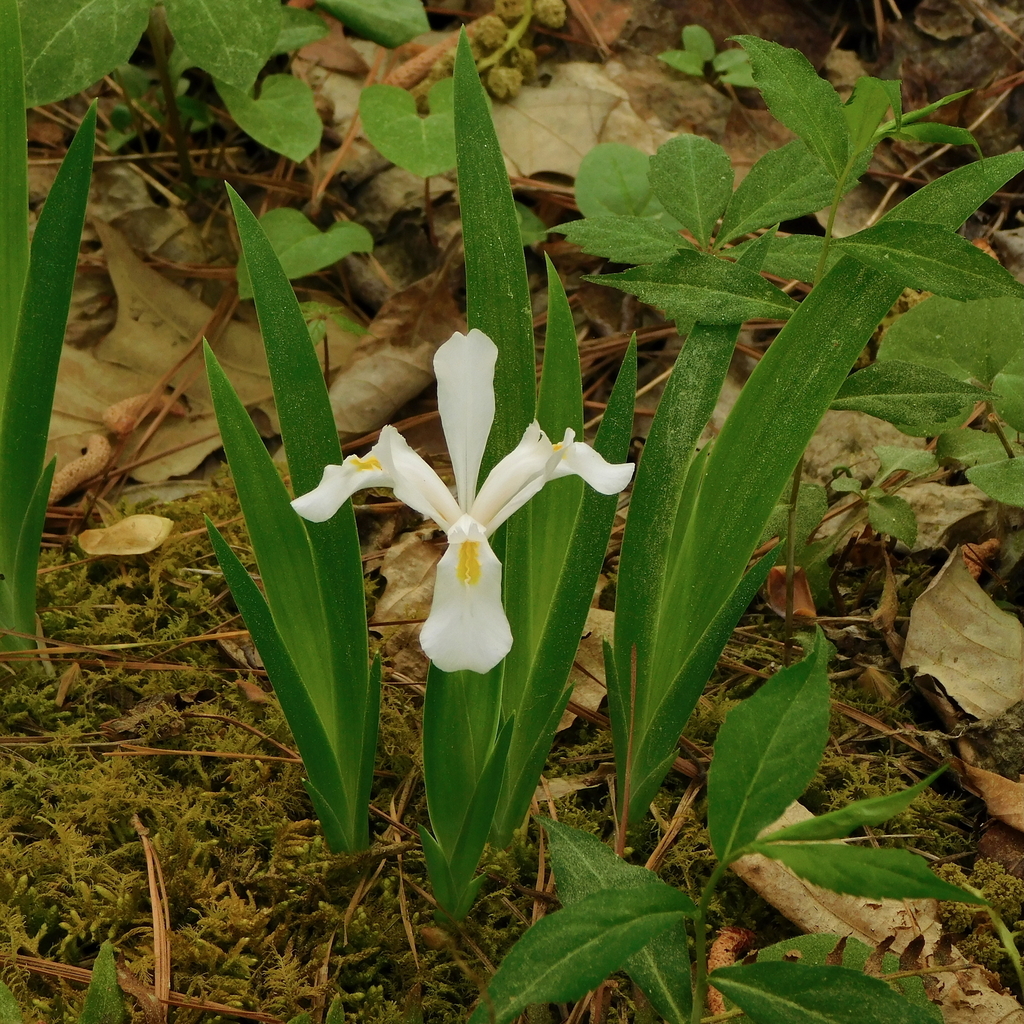
Iris cristata
- Origin
- North America
- Part used
- Flowers, Root
- Tradition
- Traditional ethnobotany
A small dwarf iris of North American woodlands, Iris cristata adorns shaded slopes with its pale blue, gold-veined flowers from early spring. The Amerindian tribes of the Appalachians and eastern piedmonts credited it with certain virtues, passed down through generations within local herbalist traditions. Today grown mostly as an ornamental plant, it retains a discreet place in traditional herbalists' notebooks.
Traditional uses
Application to skin ailments
The crushed root was traditionally applied as a poultice to certain skin irritation or lesions, according to uses reported among several Indigenous peoples of North America.
Care for minor wounds
An external use of the crushed fresh root is mentioned in certain local traditions to help with superficial healing.
A traditional use in small amounts
Like other North American irises, the root is said to have been used at a very low dose in certain traditional practices for its effects on digestion, a use that nonetheless remains poorly documented and should be approached with great caution.
A plant of the spring woodlands
Beyond its practical uses, this small iris was also valued as a marker of spring's return in the folk traditions of wooded regions.
Before you use it
The root of Iris cristata, like that of many irises, contains compounds that can be irritating to the skin and mucous membranes; any use should remain cautious and limited. Ingesting the raw root or an uncontrolled quantity is discouraged: it can cause digestive trouble (nausea, irritation). Internal use should be avoided without the advice of a qualified health professional, particularly in pregnant or breastfeeding women, young children, and people undergoing medication treatment. Do not confuse with other iris species; certain botanical identification is essential before any harvesting.
The detailed notebook
- Prepared as a paste or decoction
- Traditional duration of use
- Known contraindications
- Related species and their uses
Where to find it
Partner herbalists — available with the detailed notebook.
Sources
Wikipedia