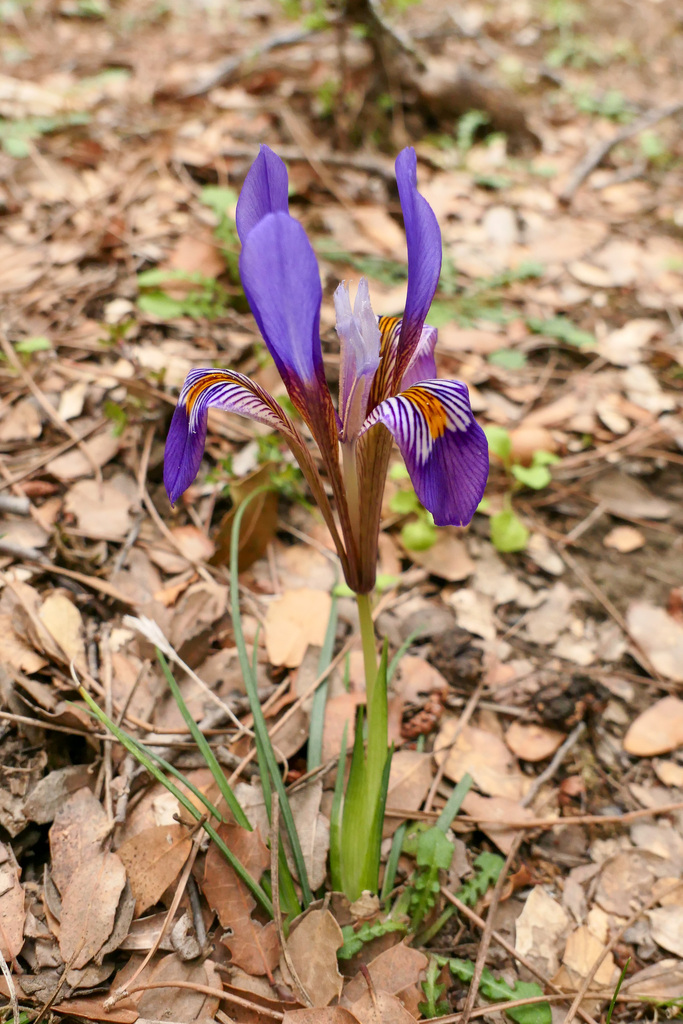
Iris humilis
- Origin
- Asia
- Part used
- Root
- Tradition
- Traditional ethnobotany
Iris humilis, a modest iris of the Central Asian steppes, has long been known to traditional herbalists for its fragrant root and its uses linked to the female world. Less celebrated than its European cousins, it nonetheless features in the notebooks of ancient nomadic and settled practitioners. Its rhizome, patiently dried, was passed down from generation to generation as a discreet remedy.
Traditional uses
Traditional cycle support
The dried root was traditionally used in Central Asia to help with troubles of the female cycle, particularly periods considered irregular or painful.
A bitter root and digestion
Like many irises, the root was sometimes used in small doses to stimulate a sluggish appetite or relieve mild digestive troubles, due to its characteristic bitterness.
A soothing external use
As a poultice or powder, the root found traditional external use to soothe certain local skin irritation.
Respiratory ailments
In certain folk traditions, a light preparation of iris root was used to help with episodes of cough or throat irritation.
What to know before use
The root of Iris humilis contains compounds irritating to the digestive mucous membranes; internal use without supervision by a qualified health professional is not recommended. The traditional use linked to the female cycle implies a potentially hormonal or uterine action: strictly to be avoided in cases of pregnancy or breastfeeding. Certain iris species can cause skin or digestive reactions in sensitive individuals; a preliminary test is advisable for any external use. Interactions with ongoing medication treatments (particularly hormonal ones) are not documented with certainty; the advice of a health professional is essential before any use.
The detailed notebook
- Prepared as a paste or decoction
- Traditional duration of use
- Known contraindications
- Related species and their uses
Where to find it
Partner herbalists — available with the detailed notebook.
Sources
PFAF, Wikipedia