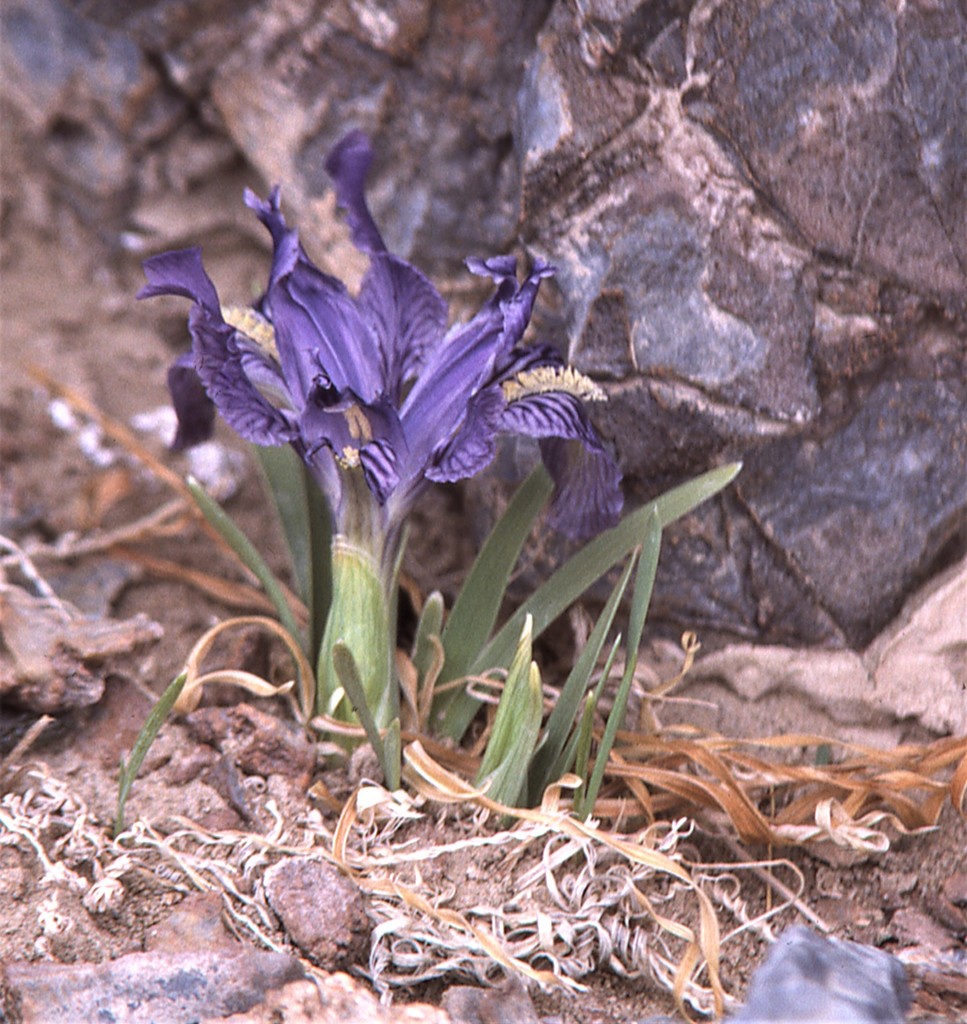
Iris potaninii
- Origin
- Asia
- Part used
- See detailed notebook
- Tradition
- Traditional ethnobotany
Iris potaninii is a small wild iris of the steppes and highlands of Central Asia, whose rhizomes have sometimes been used by traditional Asian herbalists for their soothing properties. Little known outside its native range, this plant is documented above all through folk uses passed down orally rather than through abundant written sources.
Traditional uses
Relief of joint pain
The rhizome was traditionally used as an external application to relieve joint and muscle pain in certain Central Asian folk practices.
Use as a local poultice
The crushed rhizome is reported to have been used as a poultice on inflamed or bruised areas, according to ancient local practices.
Traditional care for irritated skin
Certain traditions mention a use of the rhizome to soothe irritated skin, in combination with other local plants.
What to know before use
Rhizomes of the genus Iris may contain compounds irritating to the skin and mucous membranes; any use should remain cautious and limited. Internal use is not recommended without the advice of a health professional, as safety documentation on this particular species is limited. To be avoided in pregnant or breastfeeding women, as well as young children, as a precaution. Do not confuse with other iris species; certain botanical identification is essential before any harvesting.
The detailed notebook
- Prepared as a paste or decoction
- Traditional duration of use
- Known contraindications
- Related species and their uses
Where to find it
Partner herbalists — available with the detailed notebook.
Sources
PFAF, Wikipedia