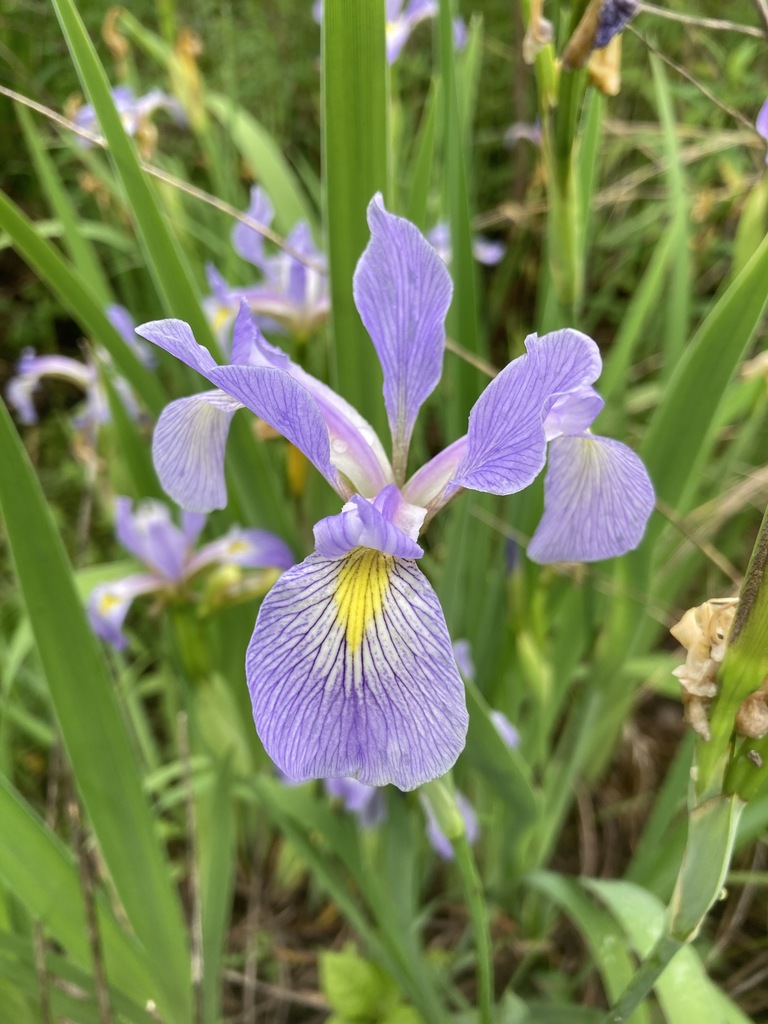
Iris virginica
- Origin
- North America
- Part used
- Root
- Tradition
- Traditional ethnobotany
In the wetlands of North America, the blue flag iris raises its purplish flowers above calm waters. Amerindian healers and, later, nineteenth-century eclectic practitioners, held its dried root in high regard as a stimulant for the liver and digestion. The notebook of the Ancients preserves a precise memory of it, tinged with a caution always warranted.
Traditional uses
Traditional support for the liver
The dried root was used in small doses to stimulate bile production and accompany the so-called spring “cleansing” cures.
Slow digestion and heaviness
Eclectic herbalists recommended it for difficult digestion and heaviness after copious meals, always at a measured dose.
Chronic skin ailments
Combined with other depurative plants, the root was included in traditional preparations intended for persistent skin problems.
A traditional drainer
Certain Amerindian traditions credited it with a tissue-draining role, as part of a broader logic of bodily purification.
Before you use it
The fresh root is reputed to be toxic and causes nausea, vomiting, and digestive irritation; only the dried root, aged for a long time, was traditionally used, and at a low dose. Use discouraged in pregnant or breastfeeding women, as well as children. Never exceed the traditional doses reported; an overdose can lead to marked digestive trouble. The advice of a health professional or an experienced herbalist is essential before any use, as this plant is not intended for self-medication.
The detailed notebook
- Prepared as a paste or decoction
- Traditional duration of use
- Known contraindications
- Related species and their uses
Where to find it
Partner herbalists — available with the detailed notebook.
Sources
PFAF, Wikipedia