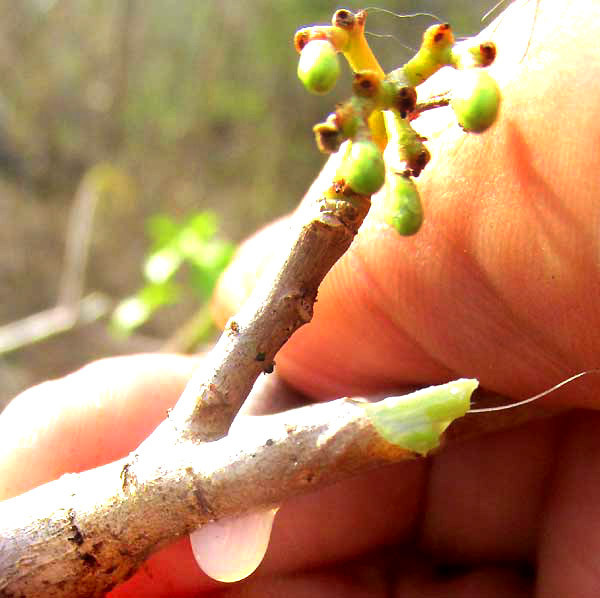
Jatropha gaumeri
- Origin
- North America
- Part used
- See detailed notebook
- Tradition
- Traditional ethnobotany
Jatropha gaumeri, a shrub of the Yucatán known locally by the Mayan name "pomolche" or "polocmasté," holds a discreet but ancient place in the pharmacopoeia of Maya healers. Its milky sap and bark were traditionally reserved for specific external uses, passed down through generations in the rural communities of Mexico.
Traditional uses
Traditional care for skin wounds
The sap or bark latex was applied with caution to small wounds or skin irritation, according to uses reported by Maya healers of the Yucatán.
Fungal conditions and itching
The bark, as an external decoction, was traditionally used as a local wash against certain skin conditions attributed to fungi or parasites.
Relief of toothache
The latex was sometimes used locally, in very small amounts, to temporarily soothe tooth pain in regional folk medicine.
An occasional use against intestinal trouble
Some communities report a use of the bark, in a very diluted preparation, for digestive disorders, a use that remains poorly documented and should be approached with great reserve.
Before you use it
The latex and seeds of the genus Jatropha contain compounds recognized as toxic; any internal use is to be avoided without the supervision of a qualified professional. Never apply the latex to mucous membranes, significant open wounds, or damaged skin without a specialist's advice, owing to the risk of irritation. Not advised for pregnant or breastfeeding women, or young children, for lack of sufficient safety data. Keep out of reach of children: the accidental ingestion of Jatropha seeds or latex is documented as dangerous.
The detailed notebook
- Prepared as a paste or decoction
- Traditional duration of use
- Known contraindications
- Related species and their uses
Where to find it
Partner herbalists — available with the detailed notebook.
Sources
PFAF