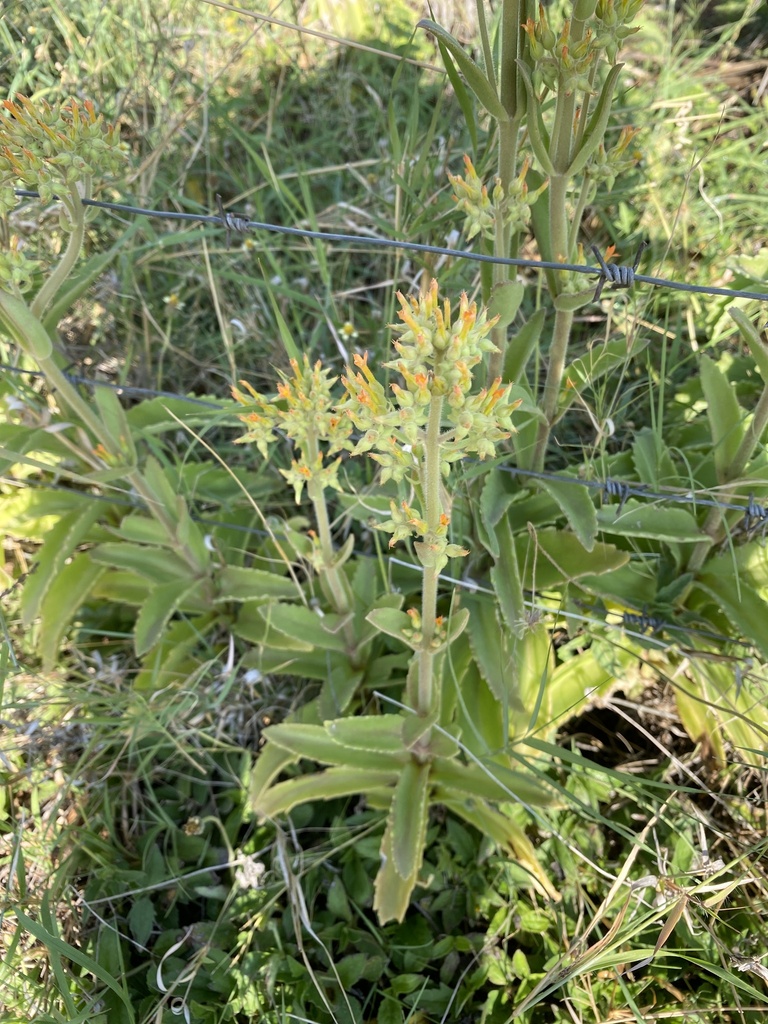
Kalanchoe lanceolata
- Origin
- Asia
- Part used
- Leaves, Root
- Tradition
- Traditional ethnobotany
Kalanchoe lanceolata is a succulent plant native to the warm regions of Asia, long known in folk traditions for its fleshy, sap-filled leaves. Ancient herbalists attributed soothing virtues for the skin to it, passed down from generation to generation within local pharmacopeia. Its use today remains empirical and essentially local, for lack of thorough studies.
Traditional uses
Relief of skin irritation
The pulp of fresh leaves was traditionally applied to minor wounds, superficial burns, or stings to locally soothe the skin.
Care for abscesses and boils
In certain folk traditions, a poultice of crushed leaves was used to help abscesses and boils mature.
Traditional use of the root
The root, less documented, was reportedly used occasionally as a decoction in certain local practices for mild digestive troubles.
Compresses against swelling
The leaves were sometimes used as a compress to traditionally help visibly reduce superficial swelling.
What to know before use
Certain Kalanchoe species contain cardiotoxic glycosides; ingestion, particularly of the root or in large quantities, is strongly discouraged without professional advice. Never use in pregnant or breastfeeding women, or young children, due to the lack of safety data. Reserve external use for well-identified preparations and avoid any prolonged contact on deeply broken skin. Consult a health professional before any internal use, and stop in case of skin reaction.
The detailed notebook
- Prepared as a paste or decoction
- Traditional duration of use
- Known contraindications
- Related species and their uses
Where to find it
Partner herbalists — available with the detailed notebook.
Sources
PFAF, Wikipedia