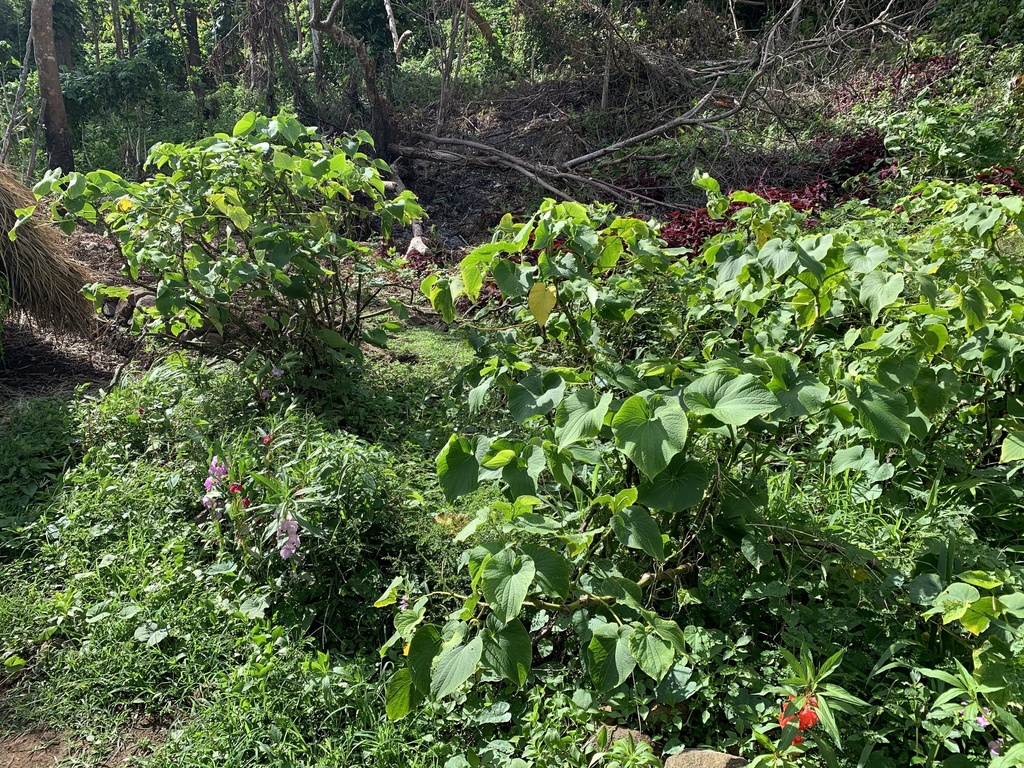
Kava
- Origin
- Oceania
- Part used
- See detailed notebook
- Tradition
- Traditional ethnobotany
In the islands of the Pacific, kava holds a place apart: far more than a medicinal plant, it was and remains at the heart of ancestral social and ceremonial rituals. Its roots, prepared as a beverage, were shared during great assemblies to foster collective calm and measured speech. The elders of Oceania credited it with a singular power to soothe mind and body.
Traditional uses
Traditional relief for anxiety
Kava root was traditionally consumed to bring a feeling of calm and relaxation, notably before moments of community exchange or rest.
The beverage of communal ceremonies
Kava was drunk during welcoming ceremonies, village councils, and celebrations, as a symbol of hospitality and social bonding.
Traditional use for muscular tension
On certain islands, the root was used locally for its perceived relaxing effect on muscles and bodily tension.
Traditional aid for falling asleep
Consumed at the end of the day, kava was traditionally associated with an easier onset of sleep.
Before you use it
Kava is associated with a known risk of liver toxicity; its use must be supervised by a health professional. Contraindicated during pregnancy, breastfeeding, or in people with liver disorders or a history of liver disease. Do not combine with alcohol, sedatives, or other substances acting on the liver or nervous system, owing to the risk of interactions. Prolonged use or high doses were traditionally discouraged by the elders of the Pacific themselves, who reserved its use for specific occasions.
The detailed notebook
- Prepared as a paste or decoction
- Traditional duration of use
- Known contraindications
- Related species and their uses
Where to find it
Partner herbalists — available with the detailed notebook.
Sources
PFAF