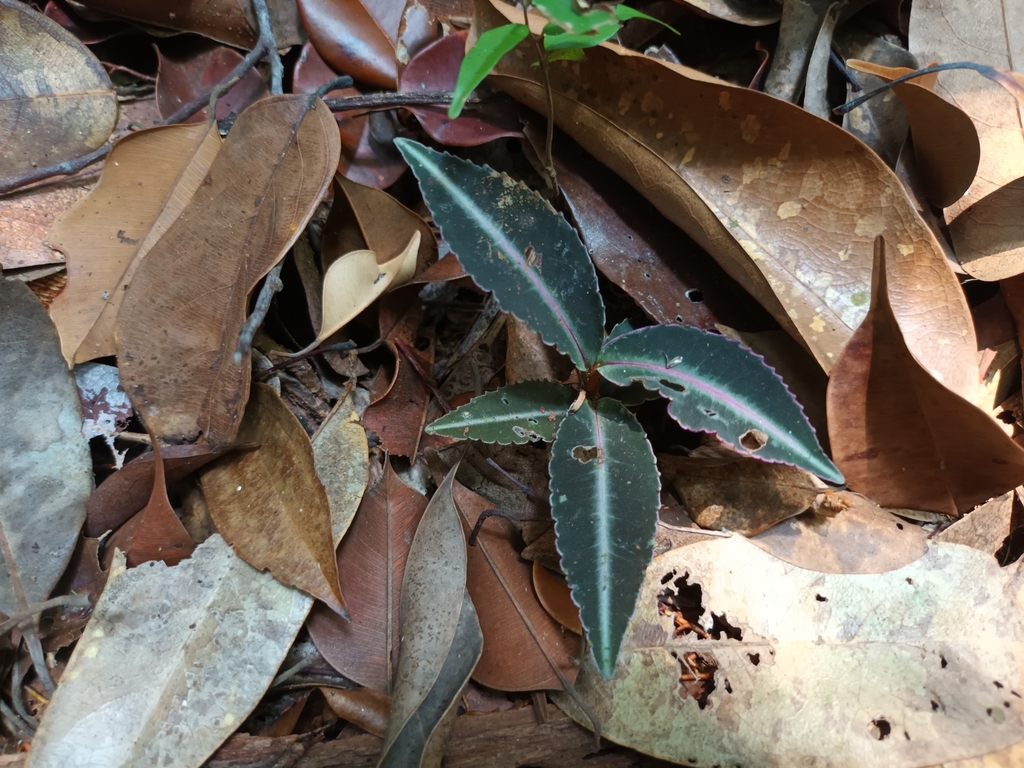
Labisia pumila
- Origin
- Asia
- Part used
- See detailed notebook
- Tradition
- Traditional ethnobotany
Known in Southeast Asia as "Kacip Fatimah," Labisia pumila is a small plant of the Malay undergrowth whose traditional use has been passed down for generations among local healers. Women of the Malay Peninsula and Sumatra consumed it particularly around motherhood and to support female vitality, while certain traditions also attribute a role for it among men.
Traditional uses
Traditional support for female vitality
In traditional Malay medicine, a decoction of leaves and roots was drunk by women to support the body after childbirth and help with the various stages of the female cycle.
A traditional male tonic
In certain local traditions, the plant was also prepared for men, with the aim of a general tonic and support for male vigor.
A fortifier after exertion or illness
The roots were traditionally made into a decoction as a fortifying remedy, particularly to regain strength after childbirth, illness, or a period of prolonged fatigue.
Traditional use against digestive troubles
Certain rural Malay traditions report a use of the plant as a decoction to soothe mild digestive discomfort.
What to know before use
A plant whose activity is compared to hormonal or estrogen-like compounds: to be avoided in cases of pregnancy, breastfeeding, or a history of hormone-dependent conditions, except on medical advice. Do not use without consultation in cases of hormonal treatment, contraception, or a hormone-sensitive condition. Traditional use in children is not documented and should be avoided. As safety data on prolonged use remain limited, it is recommended to seek the advice of a health professional or qualified herbalist before any regular use.
The detailed notebook
- Prepared as a paste or decoction
- Traditional duration of use
- Known contraindications
- Related species and their uses
Where to find it
Partner herbalists — available with the detailed notebook.
Sources
PFAF, Wikipedia