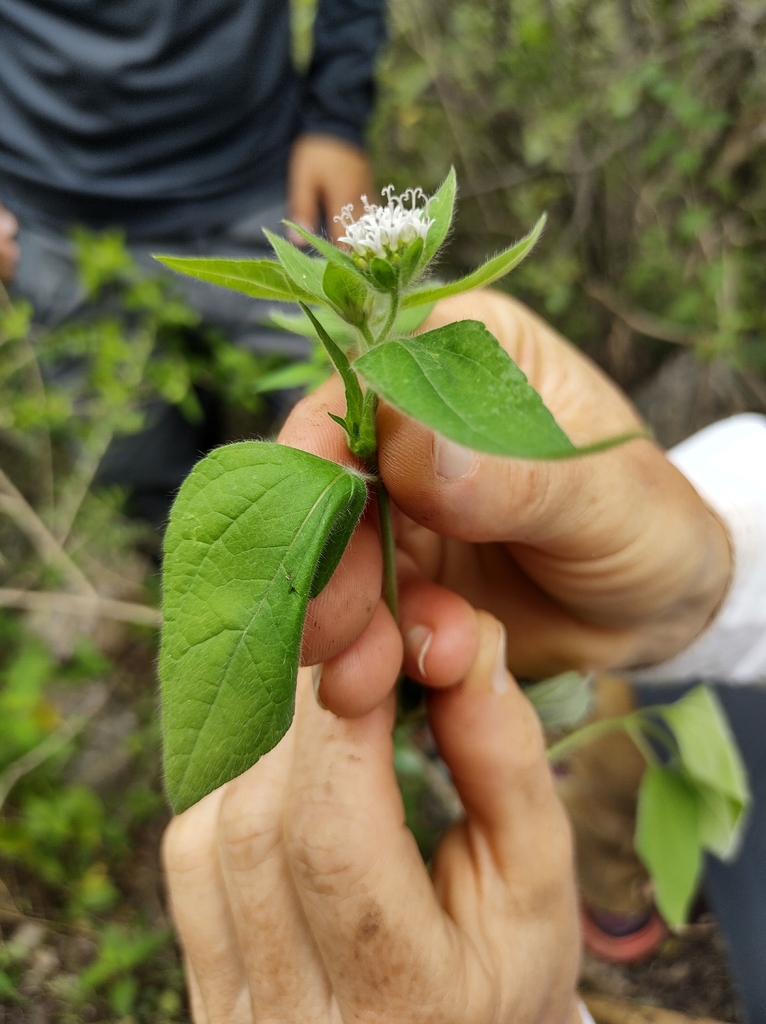
Lagascea mollis
- Origin
- Asia
- Part used
- See detailed notebook
- Tradition
- Traditional ethnobotany
Discreet and little known to Western herbaria, Lagascea mollis belongs to the vast Asteraceae family and grows spontaneously in certain warm regions of Asia. The uses attributed to it come essentially from local folk traditions, passed down from generation to generation, and remain today poorly documented in the scientific literature.
Traditional uses
Relief of the respiratory tract
In certain Asian folk traditions, the aerial parts of the plant were used as an infusion to help with coughing or respiratory tract irritation.
Traditional digestive support
The plant was reportedly used locally to help with mild digestive discomfort, although this use is reported anecdotally and with little detail in the available sources.
A soothing external use
Certain traditions report an external application, as a poultice, to help with minor skin irritation.
What to know before use
The traditional uses of Lagascea mollis are very poorly documented scientifically; the plant's full chemical composition is not clearly established. As a precaution, internal use should be avoided in pregnant or breastfeeding women, as well as young children. Do not use in combination with medication treatment without the advice of a health professional, in the absence of data on possible interactions. It is recommended to consult a health professional or qualified herbalist before any use, as this plant is not in common use in France.
The detailed notebook
- Prepared as a paste or decoction
- Traditional duration of use
- Known contraindications
- Related species and their uses
Where to find it
Partner herbalists — available with the detailed notebook.
Sources
PFAF, Wikipedia