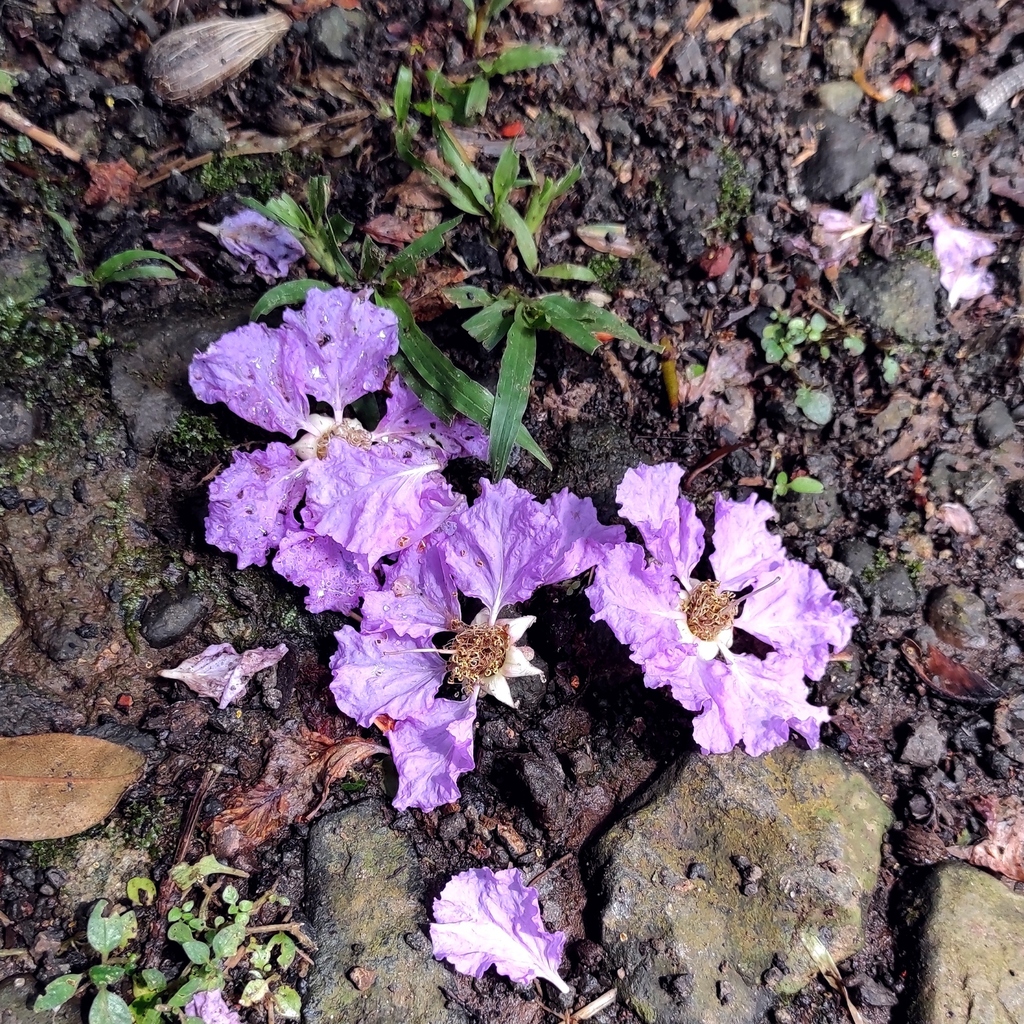
Lagerstroemia speciosa
- Origin
- Asia
- Part used
- Leaves
- Tradition
- Traditional ethnobotany
Native to Southeast Asia's damp forests, Lagerstroemia speciosa, better known as Banaba, has long adorned gardens and temples for the beauty of its purple flowers. But beyond its decorative foliage, the ancient herbalists of the Philippines and India knew it above all for its leaves, infused from generation to generation to help with the body's balance.
Traditional uses
Traditional blood sugar support
In the Philippines, Banaba leaf infusion is traditionally drunk after meals to help with sugar metabolism. This use is among the oldest and most documented of the plant.
Digestive comfort after meals
The leaf tea was also consumed to soothe digestive heaviness and ease the transition after heavy meals.
A mild traditional diuretic use
In Philippine folk pharmacopeia, Banaba is sometimes cited as a plant promoting urinary elimination.
An everyday traditional tonic
Used as a regular drink, the Banaba leaf was seen as a general support for well-being, to be integrated into daily habits rather than as an occasional course.
What to know before use
Due to its traditionally reported action on blood sugar, this plant should never be combined with antidiabetic treatment without prior medical advice, due to a risk of hypoglycemia. Not recommended for pregnant or breastfeeding women, for lack of sufficient safety data. Prolonged or high-dose use is not recommended without supervision by a health professional. To be avoided in people on regular medication treatment, due to possible interactions not fully documented.
The detailed notebook
- Prepared as a paste or decoction
- Traditional duration of use
- Known contraindications
- Related species and their uses
Where to find it
Partner herbalists — available with the detailed notebook.
Sources
PFAF, Wikipedia