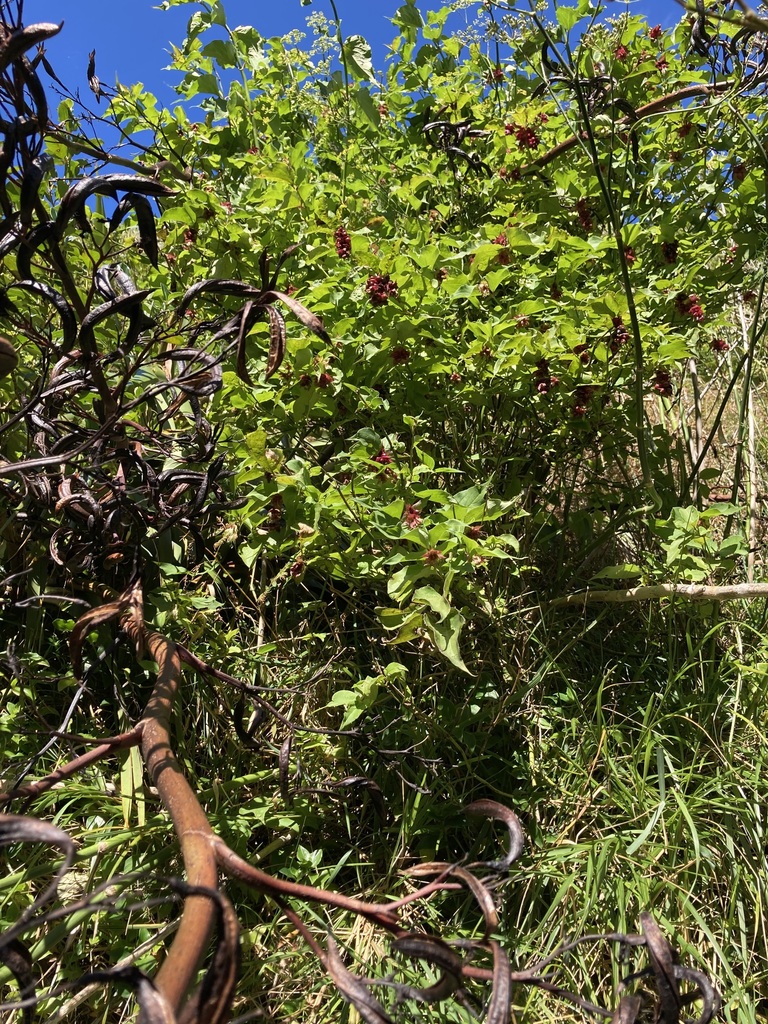
Leycesteria formosa
- Origin
- Asia
- Part used
- See detailed notebook
- Tradition
- Traditional ethnobotany
Native to the Himalayan foothills and the mountainous regions of China, Leycesteria formosa — sometimes called the "pheasant berry" — made its way into ornamental gardens before the uses attributed to it by certain Asian folk traditions were rediscovered. Its clusters of purplish flowers and dark berries long intrigued traveling herbalists, who credited it with modest but real virtues for the respiratory tract.
Traditional uses
Traditional throat support
The dried leaves and flowers were sometimes infused to soothe irritated throats and help with mild colds, according to folk uses reported in certain regions of Asia.
Help with occasional coughing
A light decoction of the aerial parts was traditionally drunk in cases of temporary cough, more as a soothing measure than a treatment.
Occasional use for digestive comfort
Certain local traditions mention occasional use of the infusion after meals, for its reputedly soothing effect on the stomach.
A soothing external application
As a poultice, the crushed leaves were reportedly applied to minor skin irritation in certain folk uses, though this practice is not widely documented.
What to know before use
Scientific and traditional documentation on this plant remains limited and fragmentary; caution is therefore required for its internal use. The berries, much appreciated by birds, are not recommended for human consumption without professional advice, as their composition is not fully characterized. Use not recommended for pregnant or breastfeeding women, or young children, in the absence of sufficient safety data. It is recommended to consult a health professional or qualified herbalist before any prolonged internal use.
The detailed notebook
- Prepared as a paste or decoction
- Traditional duration of use
- Known contraindications
- Related species and their uses
Where to find it
Partner herbalists — available with the detailed notebook.
Sources
Wikipedia