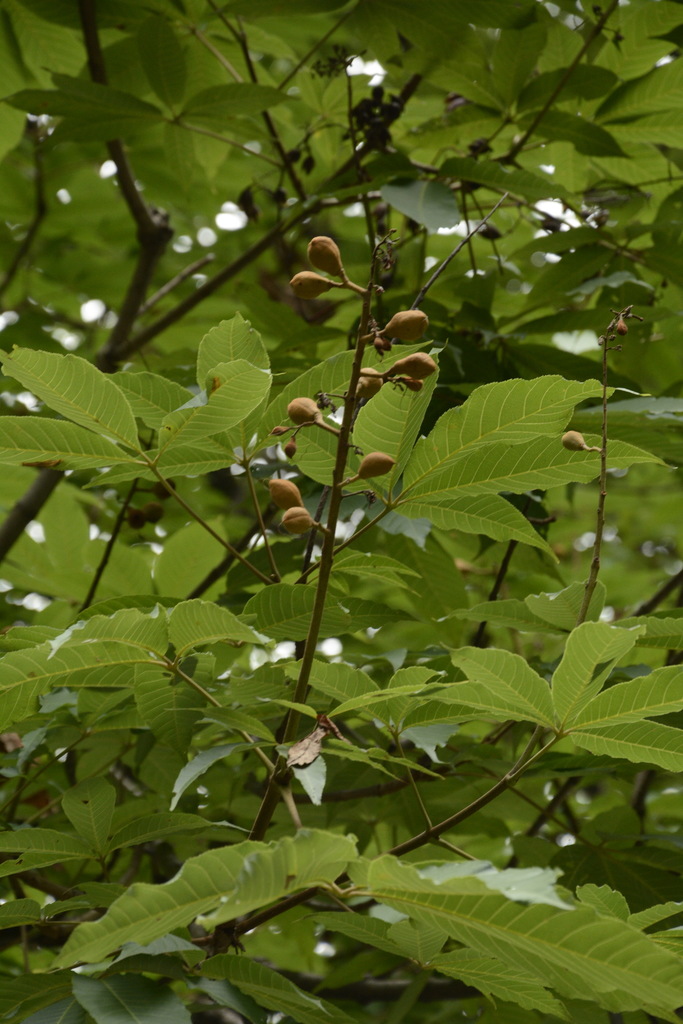
Himalayan Horse Chestnut
- Origin
- Asia
- Part used
- Seeds / fruit
- Tradition
- Traditional ethnobotany
In the Himalayan valleys, in the shade of the great massifs, the Himalayan horse chestnut drops its glossy seeds each autumn, long gathered by local herbalists. A close cousin of the European horse chestnut, it shares with it an ancient reputation linked to heavy legs and joint pain, passed down from generation to generation in the regions of Kashmir and Nepal.
Traditional uses
Relief of heavy legs
The seed, made into an external preparation, was traditionally applied to soothe the feeling of heaviness and tension in the lower limbs after long mountain walks.
Joint and rheumatic pain
Himalayan communities used preparations made from crushed seeds as a local application to help with joint and muscle pain, particularly in elderly people.
Traditional circulation support
Like its European cousin, the Himalayan horse chestnut was empirically associated with circulatory comfort, particularly during feelings of swelling or numbness in the legs.
Use as a soothing poultice
The seed pulp, crushed and sometimes mixed with other plant substances, was used as a poultice to soothe certain sensitive or bruised areas.
What to know before use
The raw seed is toxic and must never be consumed as is; it contains saponins (including aescin) that can cause serious digestive trouble or even poisoning. Internal use strongly discouraged without the supervision of a health professional or qualified herbalist, due to the toxicity of the unprepared plant. Contraindicated in pregnant or breastfeeding women, as well as young children, for lack of sufficient safety data. Do not use in cases of anticoagulant treatment or known coagulation disorders, due to potential interactions.
The detailed notebook
- Prepared as a paste or decoction
- Traditional duration of use
- Known contraindications
- Related species and their uses
Where to find it
Partner herbalists — available with the detailed notebook.
Sources
PFAF, Wikipedia