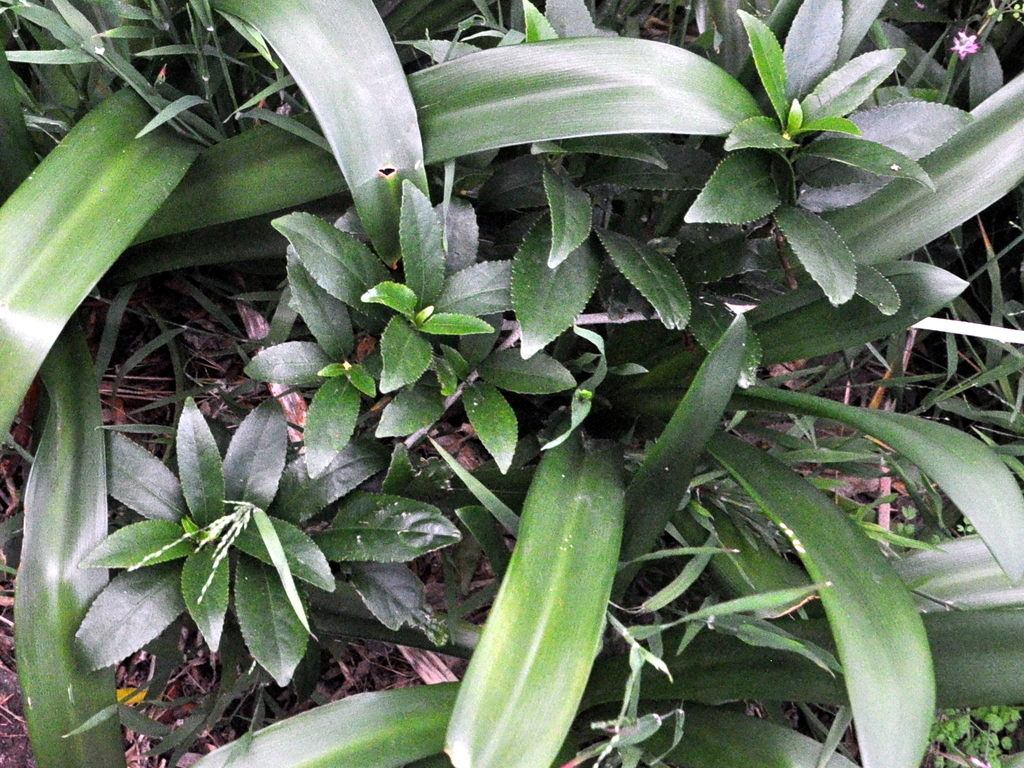
Melicytus ramiflorus
- Origin
- Oceania
- Part used
- See detailed notebook
- Tradition
- Traditional ethnobotany
Mahoe, a discreet tree of New Zealand's forests, was known to the Maori long before the arrival of Europeans. Its soft wood and leaves found, over generations, a modest but steady place in Indigenous traditional uses, notably for skin care.
Traditional uses
Soothing skin irritations
The crushed leaves, or their maceration, were traditionally applied to the skin to soothe irritations and minor skin ailments.
Care for minor wounds
In certain Maori practices, the sap or prepared leaves were used externally on superficial wounds, as a traditional treatment.
Wood used in daily life
Mahoe's soft, easily worked wood was used to make small objects, though this use is more utilitarian than medicinal.
A plant of the native forests
Melicytus ramiflorus is mentioned in New Zealand oral tradition as a familiar species of the understory, though its medicinal uses are not widely documented today.
Before you use it
The traditional uses of this plant remain poorly documented scientifically: caution is warranted for any internal use. Avoid any use without the advice of a health professional, particularly during pregnancy or breastfeeding and in children. Reserve use for occasional external applications and discontinue in case of a skin reaction. Do not confuse with other Melicytus species whose composition may differ.
The detailed notebook
- Prepared as a paste or decoction
- Traditional duration of use
- Known contraindications
- Related species and their uses
Where to find it
Partner herbalists — available with the detailed notebook.
Sources
Wikipedia