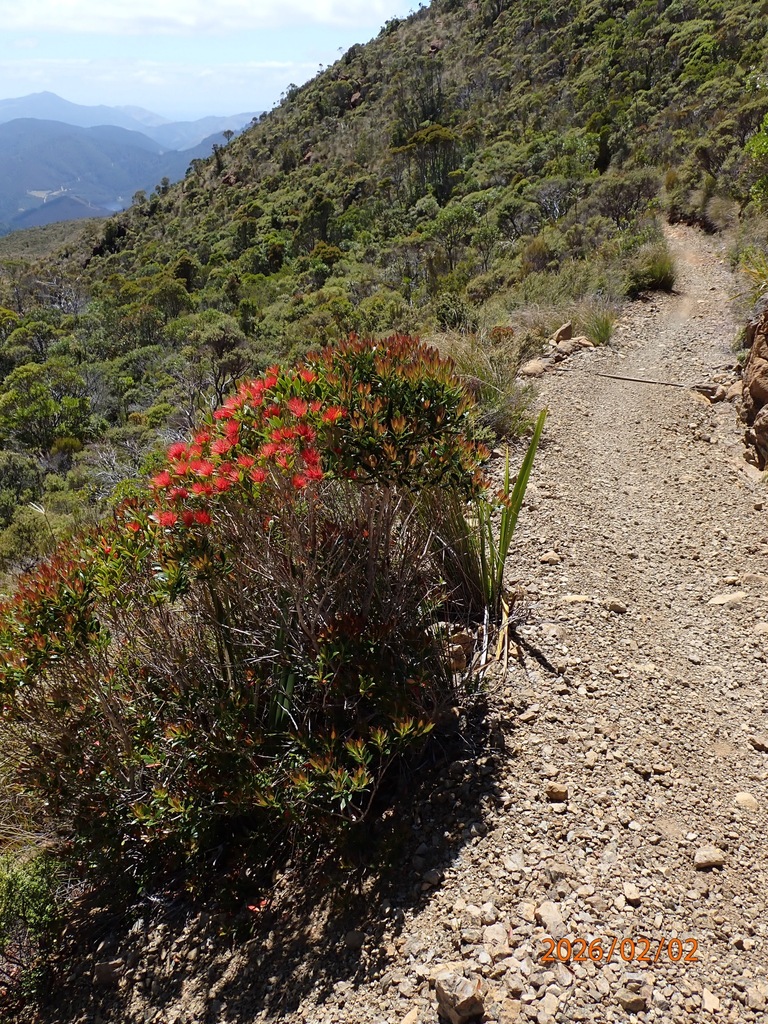
Metrosideros umbellata
- Origin
- Oceania
- Part used
- Root
- Tradition
- Traditional ethnobotany
On the wooded heights of New Zealand, Metrosideros umbellata — which the Maori call rata — raises its canopy crowned with scarlet-red flowers. A sacred tree of the southern forests, it holds a quiet but ancient place in the traditional uses of Oceania's first peoples, notably through its root.
Traditional uses
Root decoction for pain
Rata root was traditionally prepared as a decoction by Maori healers to soothe certain bodily pain, according to orally transmitted uses poorly documented in written sources.
A sacred tree of the southern forests
Beyond its internal uses, rata was considered a tree of great spiritual and material value, its hard wood reserved for specific uses in Maori culture.
A soothing traditional preparation
Certain ethnobotanical sources mention a use of the root to support digestive comfort, though the precise details of preparation remain fragmentary and poorly standardized.
Before you use it
This traditional use is very poorly documented scientifically: caution is warranted and the advice of a health professional remains essential before any use. Avoid use during pregnancy or breastfeeding, and in young children, for lack of sufficient safety data. Do not confuse with other Metrosideros species with different uses; precise botanical identification is essential. Rata is a protected species in certain regions of New Zealand: its wild harvest may be regulated or forbidden.
The detailed notebook
- Prepared as a paste or decoction
- Traditional duration of use
- Known contraindications
- Related species and their uses
Where to find it
Partner herbalists — available with the detailed notebook.
Sources
PFAF, Wikipedia