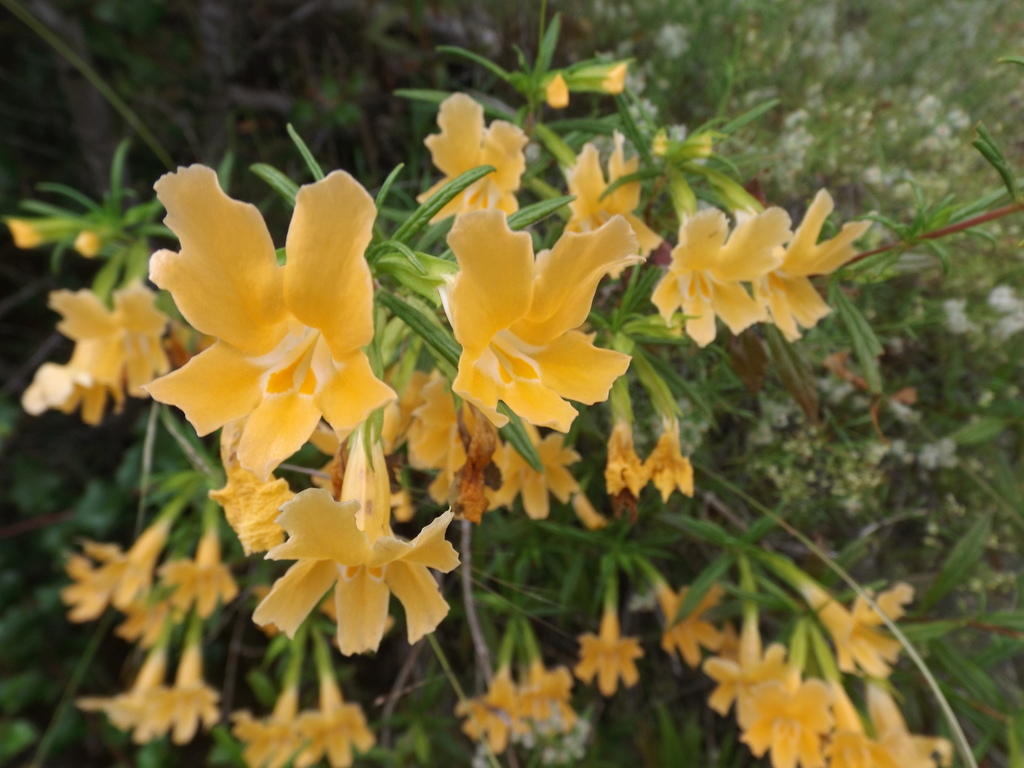
Mimulus aurantiacus
- Origin
- North America
- Part used
- See detailed notebook
- Tradition
- Traditional ethnobotany
The shrubby monkeyflower, with its ember-colored blooms, has long adorned the dry hills of North America's Pacific coast. The Indigenous peoples of California knew it well, less for internal virtues than for external uses applied to the skin. In the notebooks of folk herbalism, it appears today chiefly as an ornamental plant whose oral tradition preserves the memory of a modest skin use.
Traditional uses
Soothing minor skin irritations
Fresh leaves, lightly crushed, were traditionally applied as a poultice on stings, scratches, or superficial irritations by certain Indigenous groups of the west coast.
Care for minor skin ailments
A diluted decoction of the aerial parts was sometimes used as a local wash to calm passing itching and redness.
Californian flower essence
In modern flower-essence preparations inspired by Californian traditions, the orange flower is symbolically associated with courage in the face of everyday small fears — a use belonging to traditional belief rather than physical properties.
Before you use it
This traditional use is poorly documented scientifically: approach with caution and never as a substitute for medical advice. Do not ingest without the advice of a qualified professional, as the plant is not recognized as edible. Avoid any use during pregnancy or breastfeeding, and in young children, for lack of data. Perform a preliminary skin test before local application, as some people may show skin sensitivity.
The detailed notebook
- Prepared as a paste or decoction
- Traditional duration of use
- Known contraindications
- Related species and their uses
Where to find it
Partner herbalists — available with the detailed notebook.
Sources
PFAF