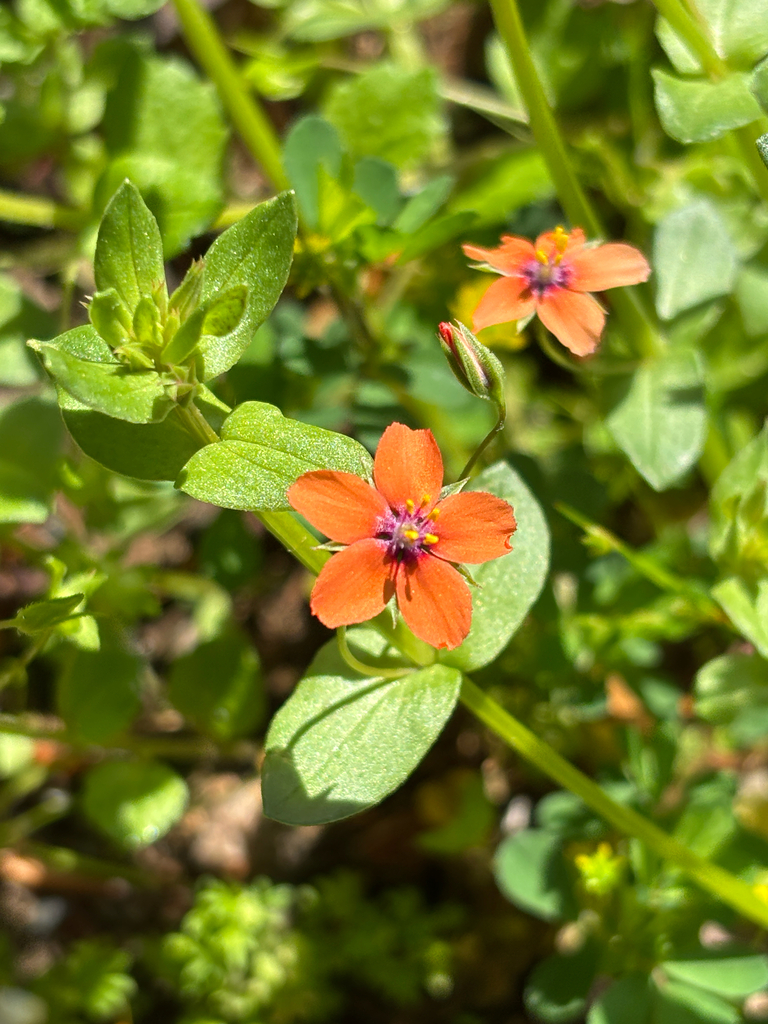
Scarlet pimpernel
- Origin
- Europe
- Part used
- See detailed notebook
- Tradition
- Traditional ethnobotany
Scarlet pimpernel, an unassuming companion of Europe's gardens and cultivated fields, was once regarded with particular attention by the old herbalists, more for its supposed virtues than for everyday use. Its small orange-red flower, which closes before rain, earned it the nickname "poor man's weatherglass." Old country notebooks mention it mainly through external uses, the plant being regarded with suspicion for internal use.
Traditional uses
Application on wounds and skin conditions
The fresh plant, crushed or as a poultice, was traditionally applied to wounds, ringworm-like patches, and certain skin conditions, in old European folk use.
Traditional use for coughs
Some herbalists of old report a use of scarlet pimpernel, in an external or highly diluted preparation, to accompany respiratory ailments, though this use is poorly documented and has fallen out of favor.
Old reputation tied to melancholy
In some folk traditions, scarlet pimpernel had a reputation for easing states of sadness or "the vapors," an old belief now abandoned by modern pharmacology.
Traditional veterinary and deworming use
In the countryside, scarlet pimpernel was sometimes used externally on livestock or as a traditional dewormer, a use now largely abandoned because of its known toxicity.
Before you use it
A plant toxic when taken internally: it contains saponins and irritant compounds that can cause digestive upset, dizziness, and irritation of the mucous membranes. Absolutely discouraged for pregnant or breastfeeding women, as well as young children, because of its toxicity. Never consume the raw plant or any internal preparation of it without the advice of a qualified health professional. For external use on broken or sensitive skin, carry out a patch test first and discontinue if irritation occurs.
The detailed notebook
- Prepared as a paste or decoction
- Traditional duration of use
- Known contraindications
- Related species and their uses
Where to find it
Partner herbalists — available with the detailed notebook.
Sources
PFAF, Wikipedia