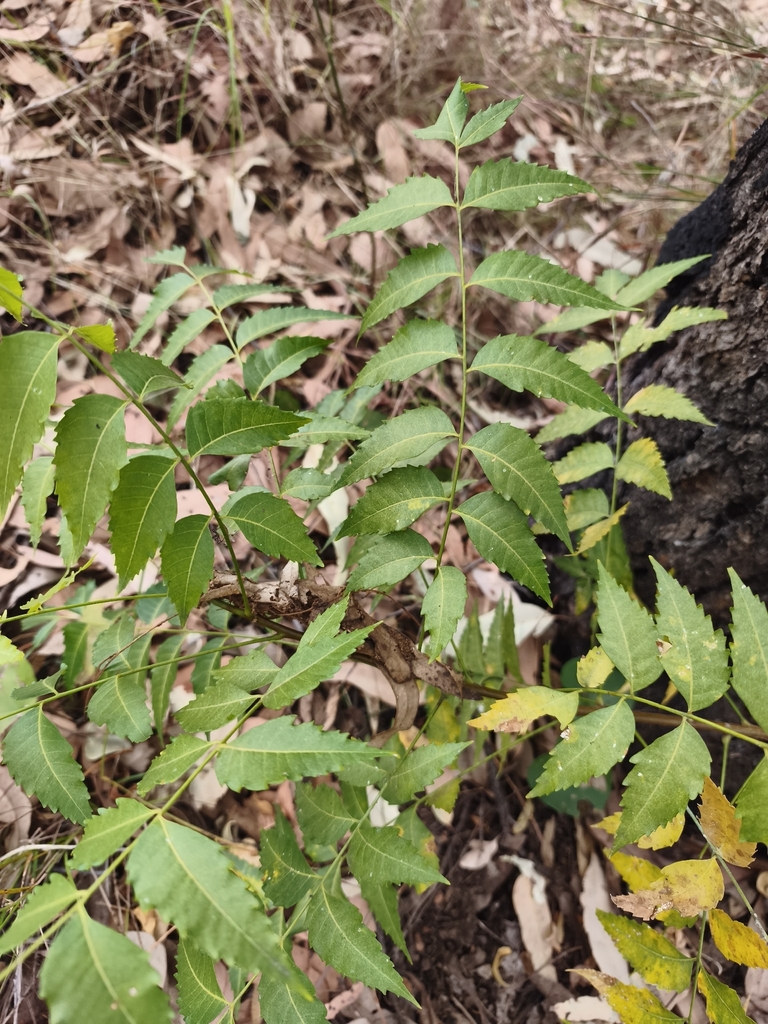
Neem
- Origin
- Asia
- Part used
- Leaves, Seeds / fruit
- Tradition
- Traditional ethnobotany
A tree revered for millennia on the Indian subcontinent, Neem is nicknamed the "village pharmacy" in Ayurvedic tradition. Every part of the tree, from its bitter leaves to its oily seeds, found its place in the domestic and ritual uses of the ancients.
Traditional uses
Traditional care for skin conditions
Neem leaves were traditionally applied or infused as a wash to help with irritation-prone or blemished skin, an ancient practice widespread in Indian households.
A natural repellent and household hygiene
The dried leaves were placed in grain stores and cupboards to keep insects away, a very old traditional use in rural India.
A traditional bitter for digestive comfort
A light, very bitter leaf decoction was sometimes consumed in small amounts in Ayurvedic tradition to help digestion after overindulgence.
Ancestral oral hygiene
Neem twigs were traditionally chewed as a dental care stick in many regions of India, a practice still observed today.
What to know before use
Neem seed oil is reputed to be toxic if taken orally, particularly in young children: its internal use is to be avoided without the supervision of a health professional. Not recommended during pregnancy and breastfeeding due to its traditionally reported emmenagogue properties. The advice of a doctor or qualified herbalist is recommended before any internal use, particularly if undergoing medication treatment. Reserved for external use in household preparations; avoid prolonged contact with mucous membranes without appropriate dilution.
The detailed notebook
- Prepared as a paste or decoction
- Traditional duration of use
- Known contraindications
- Related species and their uses
Where to find it
Partner herbalists — available with the detailed notebook.
Sources
Wikipedia