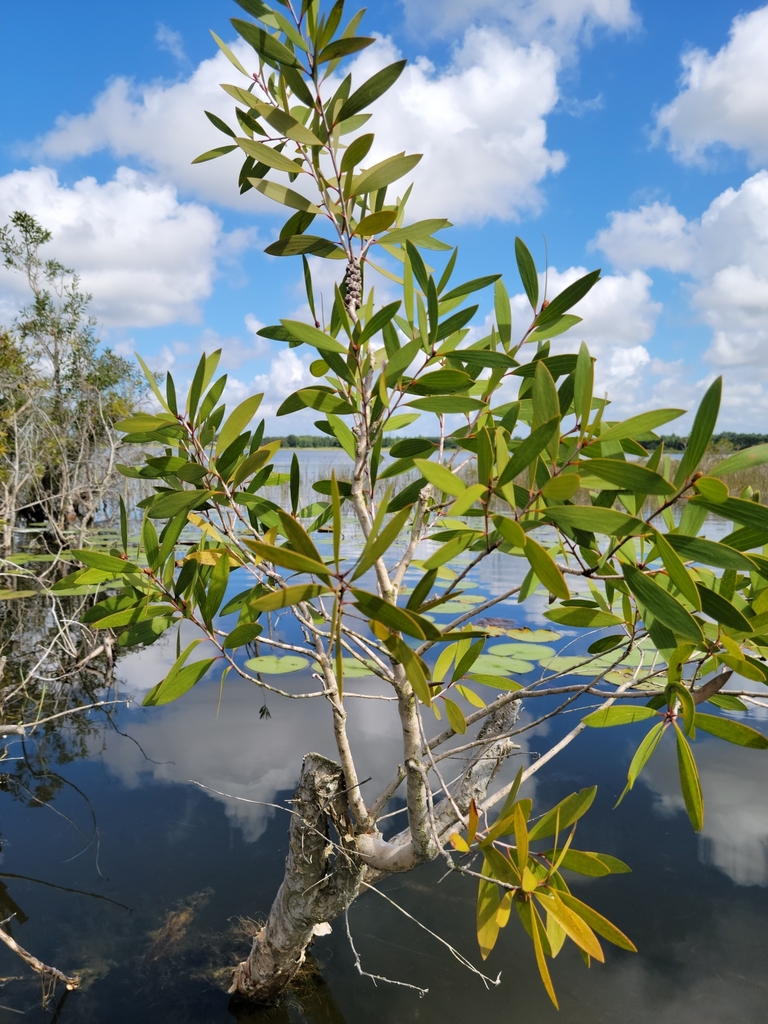
Niaouli
- Origin
- Oceania
- Part used
- Bark
- Tradition
- Traditional ethnobotany
Native to the wetlands and coastal areas of New Caledonia and Australia, niaouli is a tree with a supple trunk covered in bark that is layered and light as paper. Oceanian peoples have long known its virtues, notably through the vapor released by its burned or infused leaves and bark. Its very name evokes the long healing traditions of the South Pacific islands.
Traditional uses
Traditional fumigations and vapors
The bark and leaves were traditionally used as a fumigation to clear the airways during seasonal chills.
Care for minor skin irritations
Used externally, preparations made from the bark were applied to the skin to soothe certain minor irritations, according to traditional Oceanian practices.
Purifying the surrounding air
Burning or infusing the bark also served to purify the atmosphere of dwellings, a common practice in traditional Pacific uses.
Light digestive support
A light bark decoction was sometimes drunk to accompany difficult digestion, according to local oral tradition.
Before you use it
Niaouli essential oil, very concentrated, is discouraged for pregnant or breastfeeding women and young children without the advice of a health professional. Internal use or undiluted skin application may cause irritation; any use should remain moderate and occasional. People undergoing medication or suffering from chronic respiratory conditions should consult a health professional before any use. Do not use in case of a history of allergy to plants of the Myrtaceae family.
The detailed notebook
- Prepared as a paste or decoction
- Traditional duration of use
- Known contraindications
- Related species and their uses
Where to find it
Partner herbalists — available with the detailed notebook.
Sources
PFAF, Wikipedia