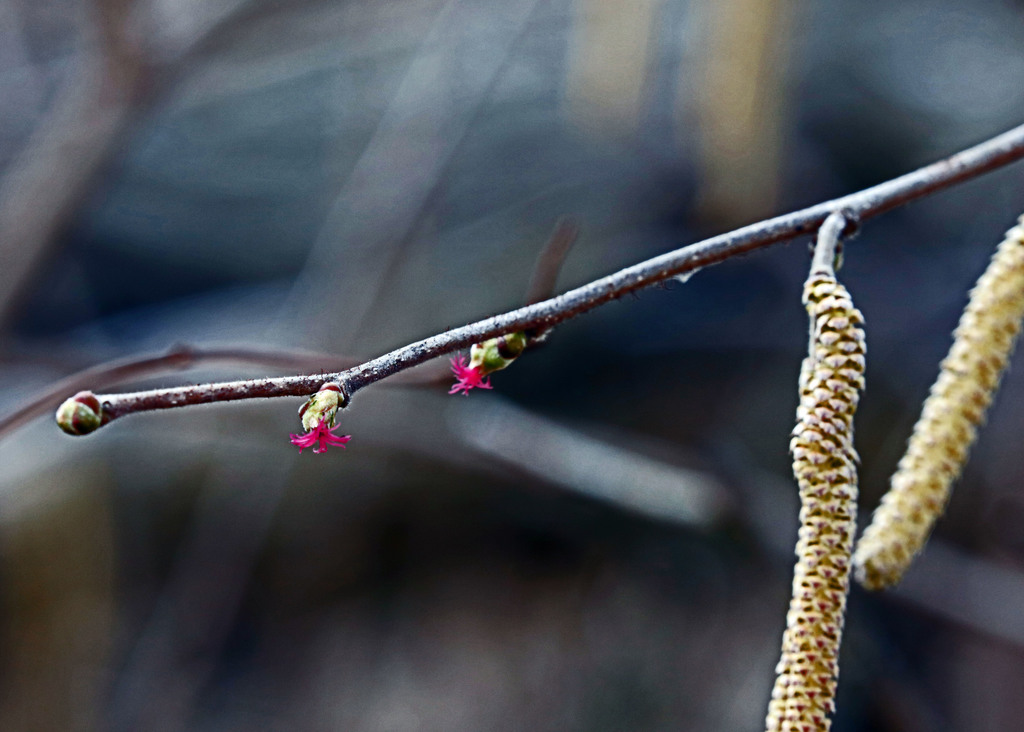
American Hazelnut
- Origin
- North America
- Part used
- Root
- Tradition
- Traditional ethnobotany
American Hazelnut, a cousin of the European hazel, grew abundantly in the understories and woodland edges of the eastern American lands. The Indigenous peoples, and the settlers who followed them, drew on its roots and wood for various home remedies, in a tradition passed down orally from generation to generation. This entry gathers the traditional uses reported around this discreet but valuable shrub.
Traditional uses
Traditional care for minor wounds
The root decoction was applied as a wash or compress on small wounds and skin irritations, according to uses reported by certain Indigenous communities of North America.
Traditional use for digestive troubles
A light root decoction was sometimes drunk to soothe passing stomach aches, in the regional folk pharmacopoeia.
Traditional pain relief
American Hazelnut appears in certain ethnobotanical records as a traditional remedy used in rubs or compresses to soothe muscular or joint pain.
Traditional use related to women's cycles
Certain ethnobotanical sources mention a traditional use of the root related to menstrual troubles, though the documentation today is not sufficiently precise or consistent.
Before you use it
The traditional uses of the root are not precisely documented; caution is warranted regarding quantities and frequency of use. Not advised without the guidance of a health professional during pregnancy or breastfeeding, owing to a traditional use noted in connection with women's health. Do not use in children without prior medical advice. If taking medication, seek advice from a health professional before any internal use.
The detailed notebook
- Prepared as a paste or decoction
- Traditional duration of use
- Known contraindications
- Related species and their uses
Where to find it
Partner herbalists — available with the detailed notebook.
Sources
PFAF, Wikipedia