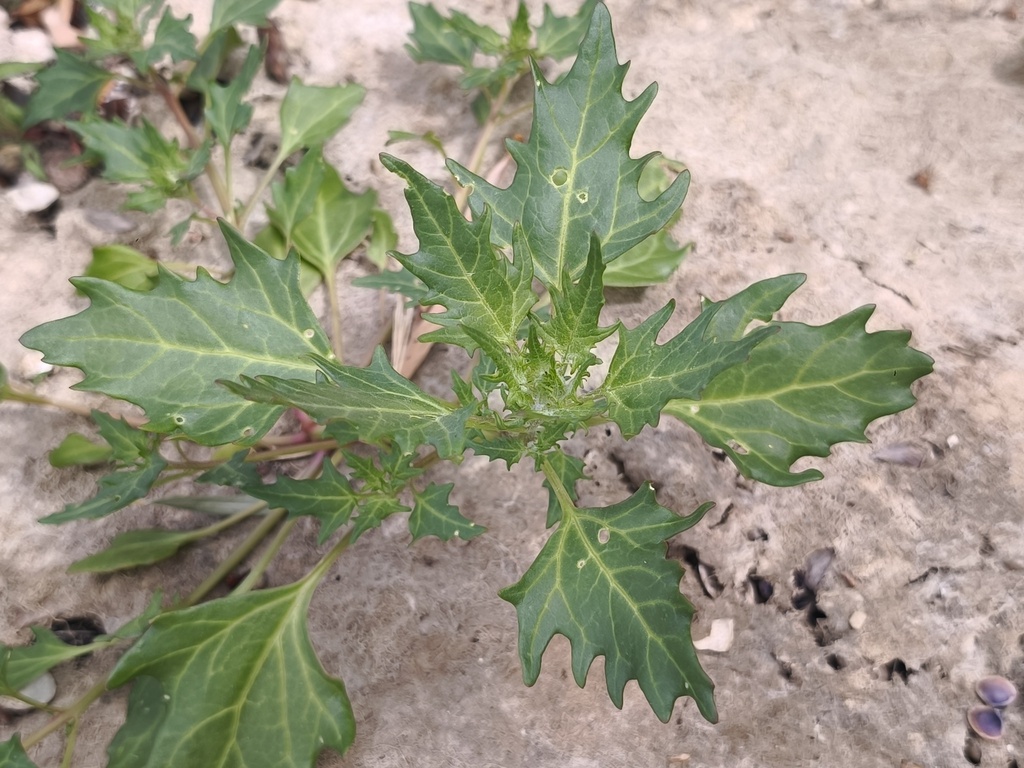
Oxybasis rubra
- Origin
- Europe
- Part used
- See detailed notebook
- Tradition
- Traditional ethnobotany
Oxybasis rubra, once called Chenopodium rubrum, is the humble red goosefoot of paths and muddy banks, long confused with its goosefoot cousins by gatherers of old. In Europe's folk herbalist notebooks it appears discreetly, sometimes as a wild famine vegetable, sometimes as a minor veterinary or household plant.
Traditional uses
Leaves eaten as a wild vegetable
In parts of rural Europe, the young leaves were once cooked like wild spinach or chard, particularly in times of famine.
Traditional light use for digestive troubles
A mild decoction of the aerial parts was reportedly used empirically to ease minor digestive discomfort, though this use is not widely documented or consistent across regions.
Occasional fodder and veterinary use
The whole plant, once dried, sometimes went into livestock feed or traditional rural veterinary preparations.
External use as a poultice
Crushed leaves were reportedly applied as a poultice to minor skin irritations according to some local traditions, though this use is poorly attested.
Before you use it
Like other goosefoots, this plant contains compounds (oxalates, saponins) that can be irritating if consumed in large amounts or repeatedly. Avoid any prolonged internal use or large doses; consumption should remain occasional and moderate. Discouraged for pregnant or breastfeeding women, as well as young children, in the absence of sufficient safety data. Consult a health professional or a qualified herbalist before any internal use, particularly if undergoing medical treatment or in case of kidney problems.
The detailed notebook
- Prepared as a paste or decoction
- Traditional duration of use
- Known contraindications
- Related species and their uses
Where to find it
Partner herbalists — available with the detailed notebook.
Sources
Wikipedia