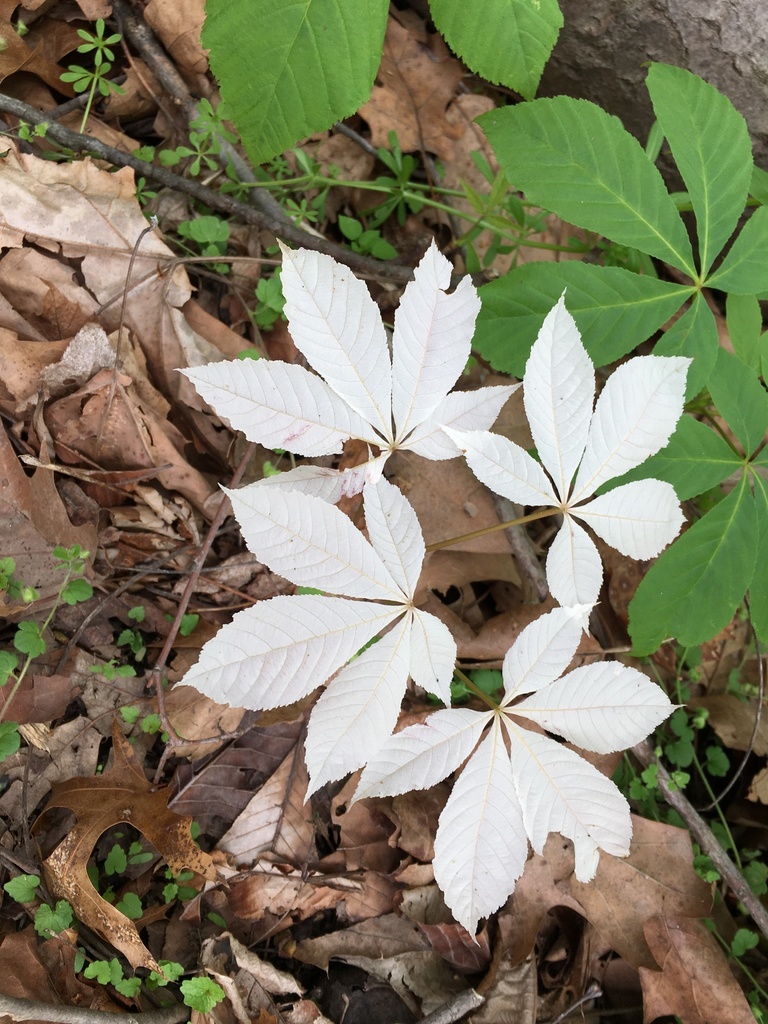
Ohio Buckeye
- Origin
- North America
- Part used
- See detailed notebook
- Tradition
- Traditional ethnobotany
A cousin of the horse chestnut, the Ohio buckeye (Aesculus glabra) is a tree native to the valleys and woodlands of North America, where Indigenous nations had long known its uses, notably as poultices and external preparations. Its soft wood, spring flowers, and above all its characteristic seeds — toxic in their raw state — earned it a particular place in the notebooks of traditional herbalism, more for external uses than internal ones.
Traditional uses
Traditional support for venous circulation
Much like the horse chestnut, the bark and prepared seeds have traditionally been associated with the comfort of heavy legs and venous circulation, mainly in external use.
Poultices for pain and swelling
Indigenous nations used preparations of crushed seeds as an external poultice to soothe joint pain, swelling, and bruises.
Traditional rubs for pain
The bark and seeds, prepared as a tincture or poultice, were traditionally used as an external rub to relieve rheumatic pain.
Various uses reported in local tradition
Certain tribes used the dried, powdered seeds, notably for ritual or local veterinary uses, apart from any direct food consumption.
Before you use it
The seeds, bark, and young shoots of the Ohio buckeye are toxic in their raw state and must never be ingested without preparation or the advice of a qualified professional. Strictly external use is recommended for preparations from this plant, unless supervised by an experienced herbalist. Contraindicated during pregnancy or breastfeeding, and in young children, owing to the toxic risk (aesculin and saponins). Do not use if undergoing anticoagulant treatment or in case of clotting disorders without medical advice, owing to possible interactions.
The detailed notebook
- Prepared as a paste or decoction
- Traditional duration of use
- Known contraindications
- Related species and their uses
Where to find it
Partner herbalists — available with the detailed notebook.
Sources
Wikipedia